
Crawford Prize
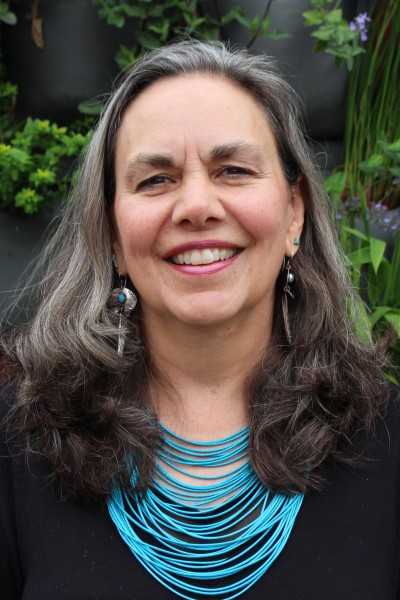
The 2017 Crawford Prize Recipient
Susan Teegen
The National Recreation Foundation presented the 2017 Robert W. Crawford Achievement Prize to Susan Teegen. With this prize, the Foundation recognized Teegen’s dedication to transforming the lives of Philadelphia’s young people through a passion for the arts.
From a young age, Susan Teegen felt called to empower youth. From leading listening circles with peers, to working as a group counselor with girls who were adjudicated, as well as with youth living in communities challenged by racism and poverty, she witnessed young people flourish when they felt listened to and were given opportunities to learn, explore and create. At age 23, she was astounded by the power of art while painting her way through the grief and pain of an intense injury, accompanied by a series of losses. These moments of revelation came to fruition when Susan focused her graduate work at Princeton Theological Seminary on the intersection of art, healing and transformation. After moving to Philadelphia and completing work in painting and printmaking at the University of the Arts, her experiences coalesced into an idea. In 2001, Susan founded ArtWell.
ArtWell’s mission is to support young people and their communities through arts education and creative reflection to discover strengths, face challenges and awaken dreams. Under Susan’s leadership, over the last 17 years ArtWell partnered with over 400 private, public and charter schools, as well as community and faith-based organizations, to engage more than 35,000 young people in reflective and academically engaging arts programs across Greater Philadelphia. Susan is adept at fostering partnerships with local artists, schools and educators to help young people and communities thrive. ArtWell has received many community accolades, including the Violence Prevention Initiative Community Award from the Children’s Hospital of Philadelphia, the George Bartol Arts Education Award from the Stockton Rush Bartol Foundation, both in 2015, and Community Service Awards from the Council for American Islamic Relations in 2010 and 2016.
ArtWell’s arts education programs utilize art as a tool for deep reflection, enhanced communication and greater academic achievement. ArtWell transforms the lives of young people facing discrimination, poverty, violence and the everyday challenges of growing up. Through collaborations between local artists and young people, ArtWell fosters thriving, just and peaceful communities throughout the Philadelphia area. ArtWell programs are made available to those who need them most, in ways that engage students and their communities, without the burden of expense.
To learn more about ArtWell, visit theartwell.org.
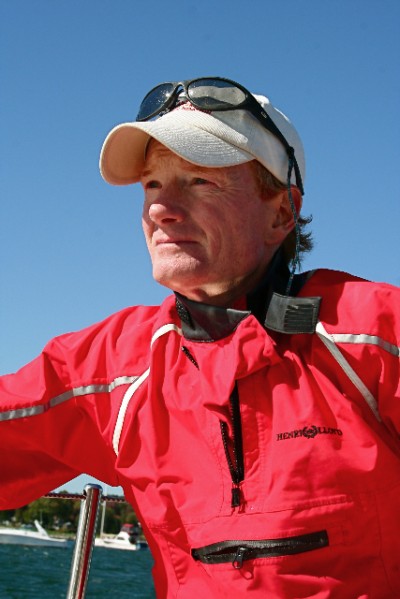
The 2016 Crawford Prize Recipient
Michael "Spike" Lobdell
The National Recreation Foundation presented the 2016 Robert W. Crawford Achievement Prize to Michael “Spike” Lobdell. With this prize, the Foundation recognized Spike’s dedication to transforming the lives of young people through exposure to the ocean and sailing.
Spike founded New England Science & Sailing (NESS) in 2004, an organization dedicated to using sailing and other adventure sports to teach life skills and academic discipline to young people throughout eastern Connecticut. Leaving a successful 30-year career at JPMorgan and XL Capital in 2008, Spike has devoted virtually all of his time over the past 12 years to the development of NESS, serving as its president and chief executive officer. He has never received a dollar of compensation for his efforts.
Today, NESS is one of the most successful community outreach sailing programs in the United States. It was named the Outstanding Community Sailing Center in 2014 by U.S. Sailing, the governing body of the sport. As a non-profit ocean adventure and education program, NESS engages students – a significant portion of whom have never been on the water and, without NESS, probably never could be – in experiential learning that builds confidence, teamwork and leadership skills through sailing, marine science and adventure sports. The number of young people from eastern Connecticut whom Spike has empowered to get out on the water, to learn sailing and other water sports and, most important, to acquire the life skills that arise naturally from these activities, is inspirational.
Under Spike’s leadership, NESS started as a community summer sailing program in 2004. Forty children, most of them tuition-paying, participated in the program that year. Today NESS is a year-round educational organization that, in 2015, served over 4,700 students in eastern Connecticut. More than half of these students receive scholarships or other financial aid that enables them to participate. In 2015, NESS provided more than $430,000 in such financial assistance (more than $1.4 million since 2008).
In the early years, NESS operated out of an abandoned lobster facility in the harbor in Stonington, Connecticut. Today it operates in seven locations in southeastern New England. Partnering with over 100 different schools to support the core STEM curriculum (science, technology, engineering, math), NESS welcomes students, mostly disadvantaged children, to NESS’s on-the-water classrooms – classrooms without walls.
To learn more about New England Science & Sailing, visit nessf.org.
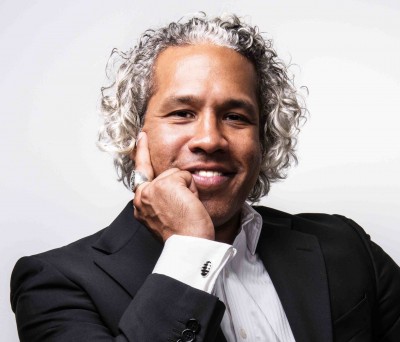
The 2015 Crawford Prize Recipient
Khary Lazarre-White
Born and raised in New York City, Lazarre-White is a social entrepreneur, educator, nonprofit leader, writer and attorney. From his college dorm room in 1995 at the age of 21, Khary made a solemn personal pledge to make a difference for the children of his Harlem neighborhood. It was then that he co-founded The Brotherhood/Sister Sol and began the work of helping young people to transform their lives. Several years later Khary chose to attend law school to diversify his skills to better serve his community. After law school, Khary turned down lucrative corporate opportunities to continue his passion of providing engaging afterschool enrichment programming, exposures and a roadmap to a successful life. The young people Khary worked with were not likely to receive this guidance, modeling and support in any other way. The Brotherhood/SisterSol was Khary’s answer.
Since 1995, Khary has devoted himself to leading The Brotherhood/Sister Sol (Bro/Sis), a nonprofit year-round youth development and mentoring program for 8-to-22 year olds. Khary serves as the executive director and co-founder of Bro/Sis.
Bro/Sis provides a "safe-place" after-school program where recreation, academic support, mentoring, world exposures and training change the course of teen lives. This exciting change is occurring in communities where many teens are struggling to survive. By providing teens with tools, skills and discipline, their experience with Bro/Sis allows these teens to envision a positive future and to believe in their dreams. The centerpiece of Bro/Sis’ success is the relationship with a trusted mentor assigned to each Bro/Sis participant. Further, each student must adhere to a Rites of Passage Pledge, which serves as an age-appropriate commitment to each participant’s newly envisioned success.
Under Khary’s leadership, Bro/Sol has demonstrated a proven track record of success:
- In West Harlem only 42% of youth graduate from high school, while 88% of Bro/Sol alumni have graduated from high school.
- 30% of West Harlem youth, ages 18-25 are employed full time or enrolled in college, while 95% of Bro/Sis alumni are either working full time or enrolled in college.
- One out of three Black men in America, ages 20-29, are under the supervision of the criminal justice system, while no alumni of Bro/Sis are incarcerated and less than 1% are on parole.
- In Harlem the teenage pregnancy rate is 15%, whereas the teenage pregnancy rate at Bro/Sis is less than 2%.
The proven success of the Bro/Sis model is based on comprehensive, holistic and long-term support for youth. Their theory of change is to provide multi-layered support, guidance, education and love to their members, thereby teaching them to have self-discipline and to form order in their lives. Then, when offered opportunity and access, these young people have the chance to soar.
Bro/Sis is locally based with a national reach as they publish assorted curricula and collections of their members’ writings; train educators from throughout the nation on their approach; and advise on educational policy across the country and New York City.
Khary received a BA with honors in Africana Studies from Brown University, and a JD from Yale Law School where he focused on international human rights law and constitutional law.
Khary has extensive experience as a public speaker on issues of education, public policy, Constitutional law issues, community organizing, leadership development, management and politics. Khary writes regular opinion pieces for The Huffington Post, and has also written essays for publications that include NYU Press, Nation Books, and MSNBC.com. He has appeared widely on media sites as a regular guest contributor and has been recognized with an array of awards including from Oprah Winfrey, Ford Foundation, NAACP Legal Defense and Educational Fund, Black Girls Rock, Andrew Goodman Foundation, Union Square Awards and Brown University. Khary serves on assorted advisory boards, including for New York City’s Young Men’s Initiative, CUNY School for Public Health, New York City Commission on Human Rights and the Heinz Endowments.
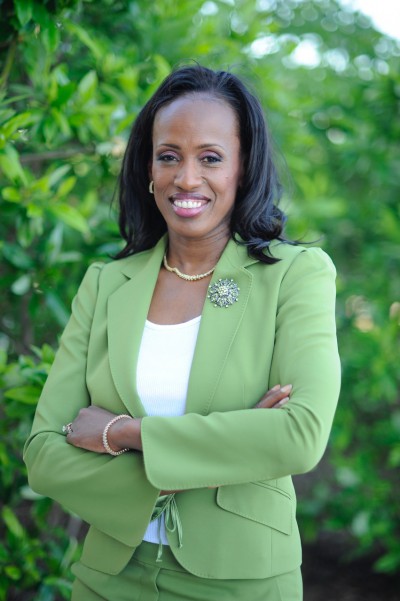
The 2014 Crawford Prize Recipient
Jacqueline Joyner-Kersee
The National Recreation Foundation presented the 2014 Robert W. Crawford Achievement Prize to Jacqueline Joyner-Kersee. Joyner-Kersee has made extraordinary contributions to the St. Louis area, and specifically to the community of the East St. Louis community through the opening of the Jackie Joyner-Kersee Center, a safe haven for young people to learn, play and contribute back to their community.
Joyner-Kersee is celebrated for her natural talent, athletic ability, desire, dedication, and determination and known throughout the world as the Greatest Female Athlete ever. She is ranked among the all-time greatest athletes in the women’s heptathlon as well as in the women’s long jump. Sports Illustrated for Women voted Jackie Joyner-Kersee Female Athlete of the 20th Century and ESPN named her one of the 50 Greatest Athletes. Joyner-Kersee has been a significant role model for women as she is the winner of six Olympic Medals (3 Gold, 1 Silver, and 2 Bronze) in four consecutive Olympics.
Jackie Joyner-Kersee’s compassion and commitment to helping others remains unwavering as she states, “Giving is a kind of grace.” The mission of the Jackie Joyner-Kersee Foundation is to provide youth, adults, and families with the resources to improve their quality of life and to enhance communities worldwide, with special attention directed to East St. Louis, Illinois. The 41,000 square-foot Center sits on a 37-acre site served by the Jackie Joyner-Kersee Metro Link Station. The Center includes a wellness center, a technology center, a game room, a 1200 seat gymnasium, full service kitchen, multi-purpose areas, a dance studio, basketball courts, a science lab, music room, and learning resource center. Additionally, there are two football fields, two softball fields, and two baseball fields.
Joyner Kersee is the author of two books, A Woman’s Place is Everywhere, and her autobiography, A Kind of Grace. Jackie Joyner-Kersee is committed to bringing awareness to causes and initiatives she is passionate about and working to involve more corporations, sponsors, and community groups in advancing her Foundation’s program and initiatives worldwide.
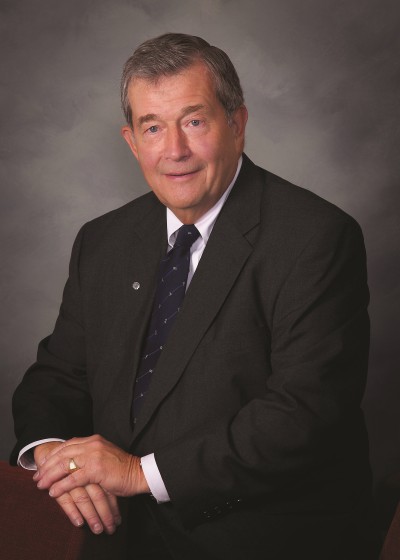
The 2013 Crawford Prize Recipient
Harrison I. Steans
The National Recreation Foundation presented the 2013 Robert W. Crawford Achievement Prize to Harrison I. Steans. Steans made extraordinary contributions to the Chicago area, and specifically to the community of North Lawndale.
Harrison Steans graduated from Princeton University in 1957 and has served in a number of executive business positions, including Chairman of NBD Corporation (1967 1988), Chairman of LaSalle National Bank (1973 1978), and currently Chairman of the Executive Committee of Financial Investments Corporation and Chairman of the Steans Family Foundation.
In 1986, the Steans family created the Steans Family Foundation to support their “I Have a Dream” program. This program sponsored a class of at-risk sixth graders and their families and supported them as they made their way through high school, family changes, and the difficult transition of leaving school. The Steans family drew on their experiences in understanding the challenges and difficulties faced by individuals and families in struggling communities and in 1995 decided to concentrate on the North Lawndale Community on Chicago’s west side in order to make a greater impact with the Foundation’s resources. North Lawndale has significant physical and cultural assets, but faced a range of urban ills, including high poverty and unemployment rates. The Steans’ Family Foundation work supports the idea that effective revitalization coupled with healthy lifestyle, education and recreational programs will help to improve the social and economic situation of the community of North Lawndale.
After the Foundation moved into North Lawndale, it worked to establish relationships within the community in order to build acceptance of the Foundation’s work in the area. Using a community-based approach, Foundation representatives met with a number of community members in order to better understand community problems and needs. One of the first collaborations involved creating the North Lawndale Learning Community (NLC) in partnership with over a dozen local schools. The Foundation also began providing a number of small grants to local organizations that supported youth activities, neighborhood beautification efforts, and block associations. Eventually this project developed into the Small Grants Initiative that continues to serve the area. Over the years, the Foundation has refined and expanded its programs, and continues to focus on high levels of community participation and capacity building. Three prime examples of the diverse scope of the Foundation’s involvement includes the development of a Charter High School, financial assistance toward the completion of research that benefits the community, and the support of special programming, particularly programs that support at-risk youth.
The Steans Family Foundation also supported North Lawndale’s first Charter High School, North Lawndale College Prep. The charter’s greatest strength has been to give students a high quality college preparatory education, social support, and challenging life experiences to help them stretch and grow. For example, through Phoenix Rising, students get summer recreational opportunities targeted to each grade level. Freshmen attend outdoor wilderness experiences in places like Colorado, where they are exposed to a drastically different environment and learn survival skills. Sophomores attend college summer programs, and juniors are placed in internships with major businesses, law firms, and other companies. Students also take College Prep for four years, which gives them a chance to explore college choices and develop insight into themselves and their community.
In 2008, the Steans Family Foundation also commissioned the Illinois Action for Children in order to complete a mapping project of all licensed early childhood programs in the North Lawndale community. Early childhood development programs can significantly improve the future success of children in school and teach them the importance of education and healthy lifestyle choices. Though resources are still limited, the Steans Family Foundation continues to seek out available stimulus funding to expand and develop more and better early childhood programs.
The Steans Family Foundation also supports the Steans Music Institute at Ravinia. Each summer, Ravinia fully funds 60–70 fellowships for the world’s most talented young professional musicians around the world. These Fellows receive one-on-one coaching with esteemed world-class faculty, including RSMI program directors. In addition to individual and ensemble study, the Fellows participate in masters’ classes with top performing artists. The classes are free and open to the public. Fellows also perform in headline concerts throughout the festival season.
Steans also was affiliated with other nonprofit organizations and served as a Life Trustee of DePaul University, Highland Park Hospital and Ravinia Festival. He also served as Trustee of the Civic Committee of the Commercial Club, the Carnegie Council of Ethics and International Affairs, the Chicago Humanities Festival, The Ounce of Prevention Fund and The Chicago Botanic Garden.
Steans and his family have made numerous contributions to youth-at-risk and have continued to support the improvement of healthy lifestyles for these youths and their communities. Therefore, it was a great honor to award Steans with the well-deserved 2013 Crawford Prize.
.jpg)
The 2012 Crawford Prize Recipient
Lieutenant General John B. Conaway
It was a great honor for the National Recreation Foundation to present Lieutenant General John B. Conaway (U.S. Air Force, retired), former chief of the National Guard Bureau, with the 2012 Robert W. Crawford Achievement Prize. Through his involvement with the National Guard Youth ChalleNGe Program (NGYC), the Chi Chi Rodriquez Foundation, and the STARBASE Program, he has been pivotal in improving communities across the country.
General Conaway served in the military for over 37 years, starting his career in 1956 as a fighter pilot and culminating with his appointment as Chief of the National Guard Bureau. He has held positions within the Pentagon as a general officer, as well as in leadership positions in the West Virginia and Kentucky Air National Guard and Vice Chief, National Guard Bureau.
For 25 years, General Conaway was dedicated to the National Guard Youth ChalleNGe Program. Early on he recognized America's alarming high school dropout rate and understood how a lack of a high school education severely reduced a person's lifetime earning potential and their ability to be a productive, contributing member of society. Moreover, the lack of a high school education can be a sentence to a lifetime of under-employment, broken dreams and a continuing multi-generational cycle of poverty. Using his position as head of the National Guard Bureau, he creatively led the way in developing a program to combat this unnecessary and preventable issue. As such, the NGYC is a community-based program that works to intervene in and reclaim the lives of 16-18 year old high school dropouts, producing program graduates with the values, life skills, education, and self-discipline necessary to succeed as productive citizens. The pilot program began with 10 sites, and has subsequently grown to 34 programs in 27 states. Over 110,000 at-risk high school dropouts have graduated the programs with 54% of them continuing on to receive their high school diploma, general equivalency degree, or adult high school degree.
The program includes eight core components -- Academic Excellence, Physical Fitness, Job Skills, Service to the Community, Health and Hygiene, Responsible Citizenship, Leadership/Followership, and Life-coping skills -- through an intervention framework that employs a quasi-military structure. The program has a 22-week residential phase followed by 12 months of mentorship. The NGYC program has been recognized as one of the most effective and cost efficient programs for targeting at-risk youth who are likely to face issues related to substance abuse, teen pregnancy, delinquency, and criminal activity. The Manpower Demonstration Research Corporation found that the NGYC has significant positive impact on the educational attainment, employment and income earning potential of former high school dropouts. It also found the program profoundly affects participants' self-esteem and progress to adulthood. Moreover, a recent RAND Corporation cost-benefit analysis of the program found benefits of $2.66 for every dollar expended on the program for a return on investment of 166%.
As a founder, original Board Member, and current Chairman of the National Guard Youth Foundation (NGYF), a 501(c)(3) that supports the NGYC Program, General Conaway has played an important role in building community support for the program and raising awareness of the program among decision-makers and corporate entities such as Microsoft, BAE, Wal-Mart, Dollar General, and Merrill Lynch. The NGYF provides the NGYC with scholarships, training and workforce transition assistance to graduates, while also increasing the visibility of the program and advocating for program goals. With his help, the NGYF has been able to donate more than two million dollars in scholarships to graduates of the program. Additionally, General Conaway established the Bo Conaway Scholarship in honor of his grandson, through which he provides financial assistance to select graduates of the program so that they may have the opportunity to attend trade school.
In addition to his work with the NGYC, he has assisted the Chi Chi Rodriquez Foundation that serves underperforming and troubled youth. This organization strives to help children on a path to success by improving their self-esteem, character, work ethic, social adjustment and academic performance by using the golf course as a living classroom. It has been rated as one of the top schools for high school dropout prevention. Gereral Conaway's contributions to this program have helped the foundation transform hundreds of lives. He was also involved with the launch of the STARBASE Program, which takes a hands-on approach in engaging underserved and underprivileged elementary students in the fields of science, technology, engineering, and math in preparation for more innovative future generations. This is a Department of Defense program that operates in more than 60 locations with 65,000 students participating annually. Further, he sits on the Board of Directors for a number of academic, corporate, and non-profit organizations throughout the country, including the University of Evansville, Mountaintop Technology, the International Telemedicine Collaboratory, AFBA Life Insurance, EWAIIT, and serves as Chairman/CEO of Paratus Associates.
General Conaway has been a leader in the field in serving at-risk youth. His efforts have been instrumental in all the organizations he has worked with which has given thousands of children and young adults the opportunity to lead productive, meaningful lives. He has been a visionary and a life-changing advocate for people with at-risk backgrounds.
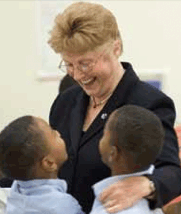
The 2011 Crawford Prize Recipient
Eleanor M. Josaitis
It was a great honor for the National Recreation Foundation to present Eleanor M. Josaitis with the 2011 Robert W. Crawford Achievement Prize for her inspirational work and numerous contributions to the Detroit Metropolitan Area.
It has been over 40 years since Josaitis, along with the late Father William T. Cunningham (1930-1997), founded Focus: HOPE in response to the race riots that erupted in Detroit the summer of 1967. The initial intent of the former housewife and Father Cunningham were to prevent further rioting in the summer of 1968, by bringing together people of all backgrounds and races for a large fair in Downtown Detroit in order to celebrate their common humanity peacefully with food and fun. Since then Josaitis and Focus: HOPE have taken on a number of community issues, affecting everything from federal food program policies, to education, to providing recreational opportunities, and workforce development practices, all while following an underlying principle of bridging race and class divides. Their modest begins have grown into a nationally renowned civil and human rights organization. Of particular interest here is the way in which Josaitis and Focus: HOPE have focused on children's health and utilized parks and recreation in order to achieve these goals. Provided below are just a few of the many examples of the work that Josaitis and Focus: HOPE have been involved with throughout the years.
As one of the first undertakings of the organization, Josaitis and Father Cunningham showed evidence of systematic race discrimination in grocery stores and pharmacies in Detroit. Black Detroiters living in the downtown area were paying more for groceries and prescription medications compared to the predominantly white population living in the suburbs. Paired with scientific research that showed the permanent limitations on children's brain capacity caused by hunger in the early years, Josaitis became an advocate for healthy child development and nutrition. With evidence in hand, she and Father Cunningham went to Washington DC to begin a long crusade against hunger and injustice against children. They continue to offer food programs with free monthly supplement of food to 42,000 pregnant women, postpartum mothers, children under the age of six, and senior citizens 60 years of age and older.
Josaitis knew the importance of nutritious food in a child's development. She also knew that it was important that children have opportunities to play and explore recreation in a safe, clean, and secure environment, which was in short supply in post-riot Detroit. In 1987, Focus: HOPE opened its Center for Children, a world-class early childhood education and childcare facility that serves children as young as six weeks to as old as 12 years through programs running before and after school. Other youth based programming includes the Community Arts Department that was established in 1995 and enrolled over 1,000 youth in 2010, providing arts and media-based development programs that nurture the importance of education, cultivates self-awareness, develops leadership skills, and encourages an understanding of multiculturalism. In addition, Focus: HOPE has a Youth Academic Enrichment program that provides assistance to partnering schools for providing summer camps to elementary students, and Generation of Promise, established in 1990 that is an urban/suburban diversity and leadership development program for high school juniors. She also led Focus: HOPE as it took down buildings that were deemed unsafe, remediated formerly polluted industrial sites so they could be put to more productive use in the community, and built and maintained parks on its campus, which is along a former industrial strip in the middle of a large neighborhood in the center of Detroit. This work has expanded to include providing safety instruction and resources for youth across the Central Woodward area of Detroit and operating youth programs on public safety through environmental design. In 1997, a tornado swept across the neighborhood, leaving a $18 million trail of damages for Focus: HOPE in which the organization was able to turn around and secure the necessary resources to building the Focus: HOPE Pocket Park which remains a gem of the community and nexus of neighborhood activity. When the city failed to adequately ensure safety for children in a public park in the neighborhood, she led Focus: HOPE, local businesses, and volunteers to adopt, improve, and maintain the park, where today children and families play daily.
More recently, the Hope Village Initiative was established in 2009 as a comprehensive community change initiative and neighborhood revitalization effort. This program aims to provide educational pathways and strong support services in order to help break the poverty cycle in this area. As part of this initiative, the organization saw that a local Detroit Public School in the neighborhood, the Paul Robeson/Malcolm X Academy, was in need of a playground. Josaitis saw the potential and worked with volunteers across the region as well as college interns to help construct a new playground at the school. In addition, the organization is also involving children in the community gardening projects where they are able to interact with the environment around them.
There are few organizations that have tried and succeeded in impacting their community in as many far-reaching ways as Focus: HOPE and the reason for taking on such a diverse and holistic approach comes down to the idea that in order to eliminate racism, people need to have educations, jobs, and opportunities in their lives. No matter what the issue or what obstacles present themselves, Josaitis is determined to see that all people have the opportunity to reach their full potential. She knows that for this to be true, children must have every opportunity to learn, play, and explore their world and that recreation is a huge part of that. Josaitis has provided tireless leadership in pursuit of a better future for the children, families, and seniors of Detroit.
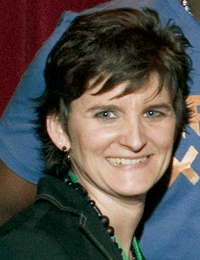
The 2010 Crawford Prize Recipient
Melissa T. Harper
Melissa T. Harper is the CEO of Good Sports, a Boston-based organization that provides sporting goods to disadvantaged youth. After receiving a BA in Communications and International Relations with a minor in Economics at the University of Pennsylvania in 1997, she worked in the consulting field managing teams which created business plans for new product development and market introductions. Her consulting experiences extended to the nonprofit field, further preparing her for taking over the leadership of Good Sports in 2004.
Under Harper's leadership, Good Sports expanded from a very small organization in 2003 to an emerging national power in 2010, serving the needs of disadvantaged children and adolescents aged 5-18 across the country. In 2003, Good Sports supplied athletic equipment to just four organizations in Massachusetts, providing about $5,000 of athletic gear to 2,000 participants. In 2009, this had increased to serve 124 programs in seven states, benefiting 148,000 youths. Primarily supporting team sports such as baseball, football, basketball and hockey, Good Sports has provided recreational opportunities to thousands of youth who had only limited or no chances at all to participate in these activities. She has accomplished this with a small staff of six in Boston and Chicago. Thus, the vast bulk of funding received by the organization has gone to support equipment purchases and not to overhead.
National Recreation Foundation supported Good Sports' expansion, financing the creation of a business plan to think through the options for growth. Harper successfully started Good Sports operations in Philadelphia and Chicago, as well as making significant inroads in Atlanta and launching a non-city-specific program that is relevant nationally. This has been one of the first instances to demonstrate the replicability of an NRF-sponsored program from a local organization to a national one.
One of the interesting ways that Good Sports builds its business is by getting the strong support of professional sports teams such as the Boston Red Sox, Boston Bruins, Philadelphia Eagles, Chicago White Sox, Chicago Bulls, Chicago Blackhawks and Chicago Bears. These teams support Good Sports by having their sports stars appear at Good Sports activities and by providing financial support from their Foundations. This model will grow and provide real momentum for Good Sports as it continues a national expansion. Recently, the Atlanta Falcons Youth Foundation has agreed to donate $50,000 to Good Sports for local team-sport equipment.
Good Sports now partners with national youth support programs such as those run by the Boys and Girls Club, the YMCA and the Pop Warner Football League. This enables Good Sports to reach more local sports teams in need of support. Under the direction of Harper, Good Sports has grown to be an innovative and successful non-profit which will serve as an example for the next generation. Her drive to build a successful non-profit has improved the lives of many young people and the communities in which they live.
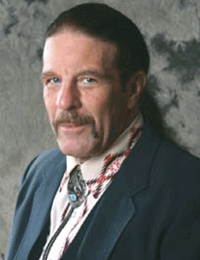
The 2009 Crawford Prize Recipient
Robert Kohel
Robert Kohel is the founder of the Eagle's Nest Center which is a not-for-profit organization created to help all youth of all races and nations to co-exist in a peaceful manner. The Center focuses on issues like fear, anger, guilt and shame associated with social problems such as drug and alcohol abuse, family violence, and depression. The goal is to provide services that address these issues through a Native American based spiritual perspective. It accomplishes the goals by providing a safe environment where youth can come and receive services that will help them create a healthy way of life in today's world for themselves as well as continued support to maintain a healthy co-existence among all people.
After a very troubled youth and early adulthood, Kohel met his wife, now of 25 years, Judy. Then in his early twenties, he saw the need to be a man and take care of his family including a son and daughter. Kohel realized that he did not want his children to go through the same life experience as himself, and he set about turning his negative behaviors into positive resources and wisdom to guide his children and their friends.
Wanting to share his love for the out-of-doors with children, the family was always involved in all types of outdoor activities. With no male role model, Kohel watched other fathers look deep inside and developed his own moral code of fatherhood. His ideas of discipline included sitting and talking with his children when things went wrong in their lives. He taught them to recognize their own negative behaviors by asking pertinent questions and explained to them how to be accountable for the choices in life. Motivated by their father's compassion for others, the Kohel children began to bring home other children they knew who were at-risk of falling through life's cracks. As a true mentor, Kohel always held true in his heart to his belief that children are sacred and with true compassion for their battles became very successful in helping these children.
Robert and Judy sold their farm and moved to rural Marquette County, Wisconsin, to begin a new life on an old run-down forty acre campground. As their children grew into high school students, their friends and the problems they brought to their home became extreme. Never turning away anyone, Kohel would sit for hours with teens and counsel them with their difficulties. Robert looked to the land to set up a youth camp. As the Kohel children moved on with their careers, other adult and youth volunteers came to take their place and help form the Eagle's Nest Center.
Kohel's personal philosophy surrounds the power of mentoring youth. When you affect a change in one person's life, you also change the lives of their children and grandchildren. Many times, out-of-pocket and through four remortgages of their own home, Kohel continued to guide youth through positive experimental projects combined with Native wisdom. His focus is with rural youth and tribal communities, particularly youth from single parent homes, foster care, and youth who have fallen between the cracks where there are no resources for recreational activities and for positive role models or counseling programs. Kohel developed three main programs which focus on transitional living, restorative justice, and cultural education.
As founder and head mentor, Kohel continues to share his Native American background and couples that with life wisdom when guiding at-risk youth. Many of his stories and teachings have their basis in nature and he strategically plans many of his teachings with outdoor events. Kohel says, "There is always an opportunity to assist, guide, and mentor young people through life wisdom, nature, and recreation".
Clearly, Robert Kohel is making a lasting contribution to the lives of young people in Wisconsin and neighboring areas.
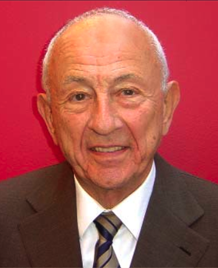
The 2008 Crawford Prize Recipient
Sidney Epstein
The National Recreation Foundation presented Sidney Epstein with the 2008 Robert W. Crawford Achievement Prize for his contributions to the youth of Chicago. Sidney Epstein was a man of enormous integrity and commitment who has spent the last 52 years making sure that at-risk children in some of Chicago's most challenging neighborhoods have had a chance to succeed in life. As Chairman of A. Epstein & Sons International, Inc., he and his brother helped to build their company from a small structural engineering firm into one of the largest full-service architecture, engineering and construction firms in the United States. He grew up believing in the principle of hard work and dedication to service. In 1956, when he was still a relatively young man, he needed both of these traits in abundance when he decided to do something about a youth club in his old neighborhood that had fallen on hard times.
Epstein had been concerned about the welfare of low income children on his native Westside, but found it difficult to raise money to help them. He was concerned about the potential closing of two youth clubs in the underserved North Lawndale neighborhood. Elliott Donnelley was also concerned about a club on the Southside. They agreed they had to do something to save these clubs. Thus, the Chicago Youth Centers was born, and now more than 50 years later it is serving 5,000 Chicago youth annually at nine Chicago inner city locations and Camp Rosenthal in southwest Michigan.
It was not an easy task in maintaining the struggling clubs in neighborhoods rife with poverty, violence, drug use, unemployment, and struggling schools along with a dramatic change in demographics involving ethnic populations. Epstein made sure the clubs maintained their commitment to all the residents who needed resources the centers could provide.
Thanks to his vision of a better life for under served children, generations living in some of Chicago's most notorious public-housing high-rises have come through their local CYC Center and discovered and realized their potential. The struggling neighborhood activity clubs have grown into flourishing centers for children from 3 – 18 who receive a continuum of care through Early Childhood Development, After School, and Team Leadership Development programs. There is also a mentoring program in place for children who have incarcerated parents. All the centers now follow a positive Youth Development model that builds on individual strengths while developing the critical assets necessary for a successful life. Of those youths participating in the program an incredibly high percentage move from the eighth grade through high school graduation with 65% going to college and the rest finding employment.
Epstein's commitment to community and his philanthropy was far reaching as he was a member of The board of Polk Brothers Foundation, Chicago Sister Cities, University of Chicago Hospitals, and The Chicago Symphony Orchestra. He remained actively involved in a network of centers he helped create, and he said "The satisfaction of working with young kids and helping them build their lives is enchanting. You can't imagine the satisfaction you get from seeing young boys and girls given a chance in life." Clearly, Epstein's belief that when given the chance children can succeed, is being realized every day. The world is a richer place because of the good work of Sidney Epstein.
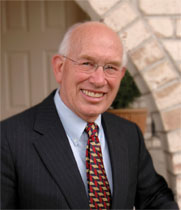
The 2007 Crawford Prize Recipient
Dr. J. Kent Hutcheson
The National Recreation Foundation was honored to present Dr. J. Kent Hutcheson with the 2007 Robert W. Crawford Achievement Prize for his contribution to the youth of Colorado for over 25 years.
In 1982 Dr. Hutcheson founded Colorado UpLift and served as a board member and president emeritus. In its 25 years of existence, Colorado UpLift has evolved into a distinguished youth organization working in the Denver Public Schools with support from Denver's top business leaders, countless community partnerships and a volunteer guild of more than 125 individuals. As a non-profit organization dedicated to building long-term, life-changing relationships with urban youth, it has received several public recognitions, including UpLift student winners of the Metropolitan Mayor's and Commissioners' Youth Award as well as the El Pomar Youth Human Service of the Year Award in 2001. There are thousands of activity-based programs for inner city youth which include Boys & Girls Clubs, athletic teams, after school programs and many local and federally funded dropout prevention initiatives.
Before founding Colorado UpLift, Dr. Hutcheson and his wife, Diane, spent 12 years in Asia developing a leadership institute for young people. He clearly has a lifetime commitment to improving the quality of life for disadvantaged youth.
Dr. Hutcheson is a Denver native who was recognized in high school as a distinguished scholar-athlete in Colorado and a Teen All-American football player. He is a graduate of Wheaton College with a major in sociology with graduate study at Florida State University as well as a Ph.D. from Columbia Pacific University. He and Diane have been married for over 40 years and have three children and two grandchildren. The National Recreation Foundation is pleased to recognize this distinguished visionary individual for his achievements and contributions to young people.
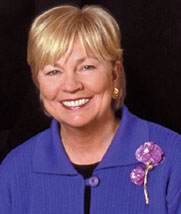
The 2006 Crawford Prize Recipient
Margaret C. Daley
The National Recreation Foundation was honored to present Margaret Corbett Daley with the 2006 Robert W. Crawford Achievement Prize for her innovative and influential contributions to advancing recreation opportunities and improving the quality of life for youth in the Chicago area.
Originally from Pittsburgh, Pennsylvania, she earned a bachelor's degree in history from the University of Dayton in Ohio and took an executive position with Xerox Learning Systems. In 1972 she married Richard M. Daley and moved to the City of Chicago and dedicated her life to public service.
Since 1991, Daley served as the Founder and Chair of the celebrated Gallery 37 program. This is a paid apprenticeship program that involves year round training for youth ages 14 to 21 to learn transferable job skills in visual, literacy, culinary, performing and graphic art under the direction of professional artists. As a result of these successful programs, the Gallery 37 Center for the Arts opened in 1999 in collaboration with the Chicago Department of Cultural Affairs.
Inspired by the flourishing interest in Gallery 37, Margaret Daley expanded the program under the name After School Matters (ASM). The aim of ASM is to capture the minds and hearts of youth in after school activities to provide them opportunities to gain important life experiences and life lessons. This is accomplished through working with mentors and other youth to provide the essential building blocks for success in later life.
In addition to the highly successful Gallery 37 programming, activities at ASM include Sports 37. Tech 37, and Words 37. Sports 37 offers youth the opportunity to learn lifeguarding, officiating, coaching, and sports broadcasting skills that could lead to employment in these fields. This program enables youth to serve as paid recreational leaders in an atmosphere that not only allows for personal growth, but is also fun and exciting. Tech 37 gives youth skill development in technology such as website development and computer refurbishing. Words 37 helps youth develop competence in reading, writing, and public speaking. Summer Internships for this program are highly competed for at locations such as the Mexican Fine Arts Museum and the Chicago Historical Society.
The ASM, under Daley's leadership, grew from nine programs in three high schools in the Chicago area serving 180 teens in 2000, to 853 programs in 35 high schools in 2005 serving over 23,000 teens. Although ASM is open to all youth in the city of Chicago, it reaches out to the lowest performing schools in disadvantaged neighborhoods in which 93% of the students qualify for the free and reduced student lunch program. By the end of 2006, Margaret Daley's goal was have the ASM program available in every public high school in the city, serving at least 50% of Chicago's high school students.
Daley's passion for youth also translated into other notable positions. She was the chair of the Chicago Cultural Center Foundation whose purpose is to provide to the public free of charge our exposure to Chicago's rich multi-cultural life. She was also on the Board of Directors for several prominent organizations including the Chapin Hall Center for Children, the Golden Apple Foundation, and the Children at the Crossroads Foundations. All of these organizations seek to improve the lives of children through educational efforts.
The efforts of Margaret Daley to advance the quality of life for youth in the Chicago area were an inspiration. Through her innovative programs, she demonstrated the successes of reaching disadvantaged youth through the arts and recreation. Under her creative leadership, thousands of disadvantaged young people realized the path to more fulfilling futures. For these reasons, the NRF is proud to have recognized her outstanding contributions.
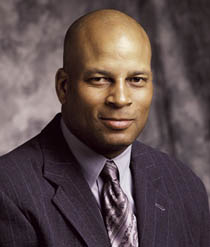
The 2005 Crawford Prize Recipient
Ronnie Lott
The National Recreation Foundation recognized Ronnie Lott for his outstanding leadership for youth with the 2005 Robert W. Crawford Achievement Prize.
Ronnie is much more than a Hall of Fame football player who, as part of his National Football League (NFL) obligation, has done nice things in his community. Ronnie Lott’s football career began at the University of Southern California and spanned 14 seasons from 1981 to 1995 in the NFL with three different franchises. He was inducted into the Pro Football Hall of Fame in 2000 and the College Football Hall of Fame in 2002.
In his memorable NFL career, Ronnie Lott led by example and was known as a fierce competitor. He earned the reputation of being one of the hardest hitting defensive backs in NFL history, and he earned the respect of those who played against him and with him. From the moment he joined the San Francisco 49ers in 1981, his dedication and fierce, all-out play inspired his teammates. On the field, he was continually yelling to his teammates to play harder. Off the field he was just as vocal, a leader in the club house and a man willing to help younger players who were struggling.
Since his retirement from football in 1994, “giving back” and helping kids has been his mantra. Away from football Ronnie Lott is very different from the aggressive on-field persona which fueled his reputation. Now what you see is a soft-spoken man who has given of his money and his time to a variety of charities. He is one of the most respected individuals in the San Francisco Bay area and is an exemplary role model.
In 1989, Ronnie founded All Stars Helping Kids, a non-profit organization which helps disadvantaged youth in the Bay Area. Ronnie conceptualized the organization on the core belief that it is up to all of us to make sure the next generation thrives and therefore it is a team effort. As President, Ronnie plays an active role in the organization which includes numerous special appearances, fundraisers, and site visits to organizations such as the University of California San Francisco (UCSF) Children’s Hospital.
Since its inception, All Stars Helping Kids has been a galvanizing force and a vehicle for individuals and corporate partners to invest in the future of children in the Bay Area. All Stars supports organizations that are making a positive impact on the well-being and future of disadvantaged children and their families. The organization makes grants annually to organizations that are breaking the cycle of poverty through education, supporting early childhood and youth development, meeting children’s physical and mental health needs, and making life brighter for seriously ill children and their families. Of the many achievements of All Stars includes the dedication of the All Stars Technology Room and a children’s garden at the UCSF Children’s Hospital. In 2002, All Stars was able to allocate nearly $2 million to organizations to advance the education, development and health of children.
Ronnie Lott is respected as an outstanding role model for youth and has done so much in leveraging his talents and skills in helping others. For his belief in the future of youth, the National Recreation Foundation was honored to award Ronnie Lott with the 2005 prize.
Robert W. Crawford Achievement Prize
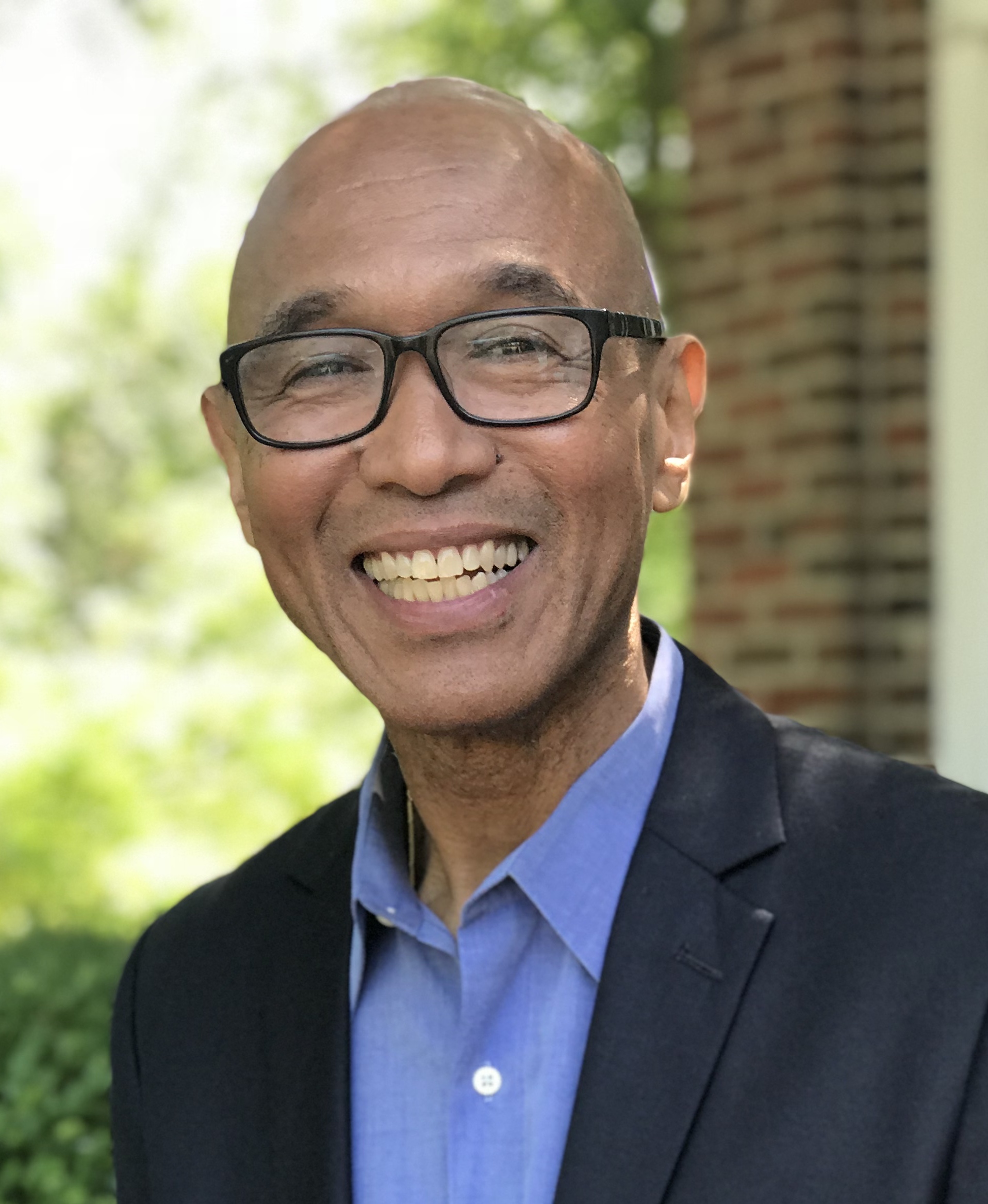
The 2018 Crawford Prize Recipient
Peter Westbrook
Peter Westbrook is no stranger to struggle. Born to a Japanese mother and an African-American father, Peter and his sister were raised in poverty in Newark, New Jersey. Peter enrolled in fencing as the result of a five-dollar bribe from his mother, who, as a single parent, was desperate to keep him off the streets. Born in Japan into a long line of samurai warriors and Noh dancers, she understood that fencing, with its discipline, speed and mental challenge, had a good chance of capturing her young son’s imagination. She was correct in her suspicions, and Peter soon excelled at the sport. His passion for the sport would yield a full fencing scholarship to New York University, where he received world class coaching and a B.S. in Marketing. He eventually would be acknowledged as the greatest American fencer of the 20th Century.
The Guinness Book of World Records lists Peter Westbrook as the all-time winning American record holder for 13 U.S. National Sabre championships. He is a six-time Olympian and the first African-Asian American Olympic Sabre-Fencing Champion, capturing a Bronze Medal in the 1984 Los Angeles Games. In addition to holding three Gold Medals from the Pan-American games, Peter was honored by his fellow Olympians with the role of flag bearer for the United States during the closing ceremonies for the 1992 Olympic Games.
In 1991, Peter founded the Peter Westbrook Foundation, which uses the sport of fencing to assist young people to achieve their personal best emotionally, intellectually and physically.
Since its launch 25 years ago, Peter Westbrook Foundation athletes have represented the United States in fencing tournaments around the world. The impressive accomplishments of its young athletes include: qualifying for and medaling in Olympic Games, qualifying for and medaling in the Senior World Championships, and bringing home 37 individual and team national titles. As a result of this highly successful program and training, Peter Westbrook Foundation athletes continue to receive outstanding scholarships, excel academically, and graduate from top universities throughout the United States. The over 4,000 youth served by the Peter Westbrook Foundation unquestionably are making their mark on the world.
To learn more about the Peter Westbrook Foundation, visit: www.peterwestbrook.org.
.jpeg)
2019 Prize Recipient
Richard Louv
Richard Louv is a journalist and author of ten books, including Last Child in the Woods, The Nature Principle and Vitamin N. Translated into 20 languages, his books introduced the term “nature-deficit disorder,” and have helped launch an international movement to connect children, their families and communities to nature.
In addition to his role as a journalist and author, Louv is co-founder and chair emeritus of the nonprofit Children & Nature Network, which supports a new nature movement through partnerships with such organizations as the National League of Cities.
In 2008, he was awarded the Audubon Medal, presented by the National Audubon Society. Prior recipients have included Rachel Carson, E. O. Wilson, Sir David Attenborough and President Jimmy Carter.
Louv has written for the New York Times, Outside magazine, Sierra magazine, Orion Magazine, and Parents, among other publications, and he has appeared on CBS This Morning, NBC’s Today Show, ABC’s Good Morning America, NPR's Talk of the Nation, and others.
To learn more about the Richard Louv, visit: richardlouv.com.
To lean more about the Children & Nature Network, visit: childrenandnature.org.
Robert W. Crawford Achievement Prize
Robert W. Crawford Achievement Prize
Robert W. Crawford Achievement Prize
Robert W. Crawford Achievement Prize
2020 Prize Recipient
Derwin Hannah
When Derwin Hannah moved to Southwest Baltimore’s Mill Hill neighborhood more than 20 years ago, a dangerous and decaying park on the corner of Catherine and Ashton streets was full of dumped trash, shattered glass and broken concrete, which attracted illegal activity. Today, that park—ABC Park—is the heart of the community, welcoming more than 100 people a day; serving as home field for 250-plus youth involved in its Seminoles Sports League; and hosting annual family fun events that bring everyone in the surrounding communities together.
Robert W. Crawford Achievement Prize
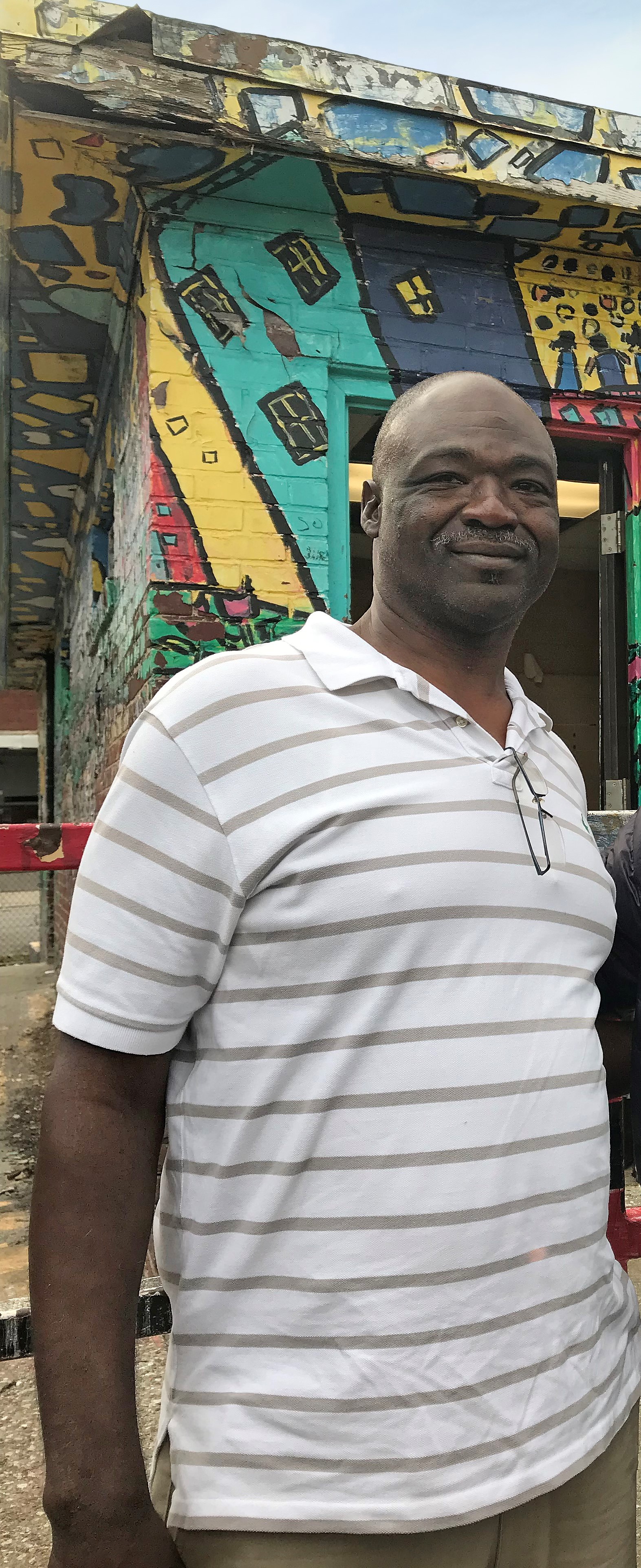
Revitalization of ABC Park (also known as Catherine Street Park) was from the bottom up. Hannah wanted his son to be able to play in the park (instead of on the sidewalks or in the streets, which other parents deemed safer than the park), so he began cleaning it up on his own. As his grassroots effort evolved, Hannah started to enlist the support of local business owners and government leaders so that all of the neighborhood children could have a safe place to play. In 2010, Hannah and his partners, along with a large squad of midshipmen from the nearby U.S. Naval Academy, deep cleaned the park and saved it from destined despair.
In 2013, Hannah created new opportunities for youth in the community when he started a tackle football program at the park, which rapidly grew into the Seminoles Sports League. The league is now a year-round sports and mentoring program, run by Hannah and 16 volunteer coaches, that offers football, basketball, baseball, dance and cheerleading at little-to-no-cost to hundreds of 6-17 year-olds who participate year after year.
As Hannah’s commitment to the children and to the community grew, so did the attention that ABC Park received. The city of Baltimore, along with the National Recreation and Park Association, put forward more than $1.65 million in funding to fully renovate ABC Park. In the fall of 2019, after years of planning and months of construction, ABC Park was reopened complete with state-of-the-art playground structures, swings, fitness equipment, splash pad, basketball courts and a field house—outfitting one of the most active small parks in the city with new facilities.
2022 Prize Recipient
2023 Prize Recipient
Manny Almonte
2024 Prize Recipient
Atiya Wells
2025 Prize Recipient
Heather Kuhlken

Having accomplished so much on behalf of ABC Park and the youth in his community, it is hard to believe that Hannah's efforts are those of a volunteer. He earns his living as a commercial driver delivering supplies to hospitals at night.
Since he started working in ABC Park more than decade ago, Hannah's efforts have transformed a trash-strewn vacant park that neighbors feared to enter into a safe space for children to come and play, offering hundreds of families a support network for mentorship and opportunity, and helped make the urban park a center for community cohesion, investment and sports recreation.
2021 Prize Recipient
Hannah is a force of nature. He wants, quite simply, the appropriate spaces and tools to make sure the children of West Baltimore are given love, respect and understanding in a supportive, active environment. As he often notes, “Every child needs the right to have an actual childhood, and that means having a safe park to play in.”
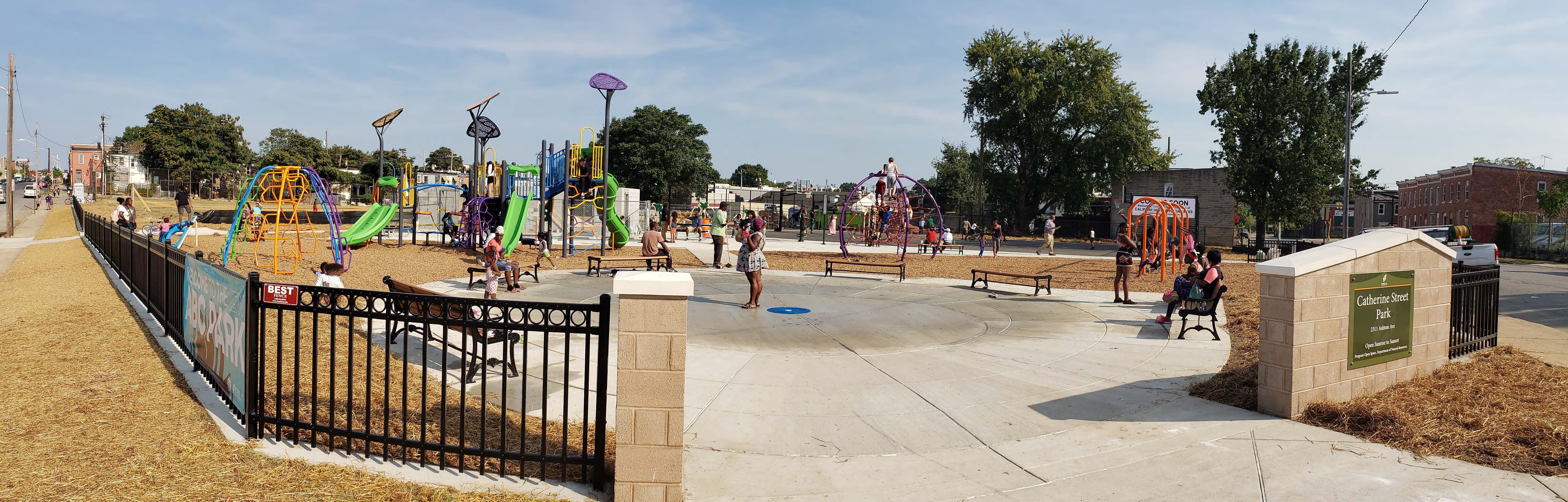
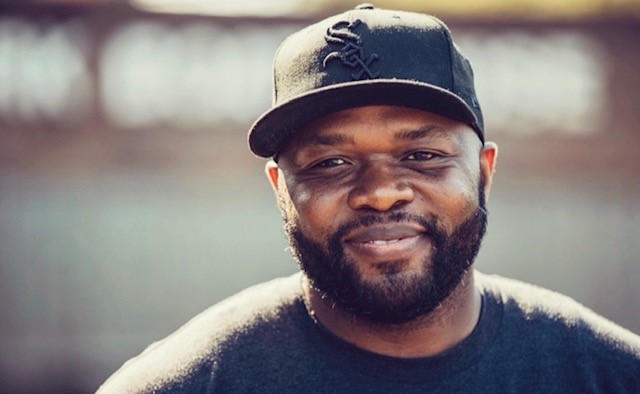
Arshay Cooper
Growing up on the West Side of Chicago in the late 1990s, Arshay Cooper witnessed firsthand the devastating impact that poverty can have on a community. Cooper and his fellow students at Manley High School were living in a war zone, where hopelessness was ever present; opportunity was not.
Opportunity for Cooper arrived in the form of a boat sitting in his school’s lunchroom alongside a sign that read, “Join the Crew Team.”
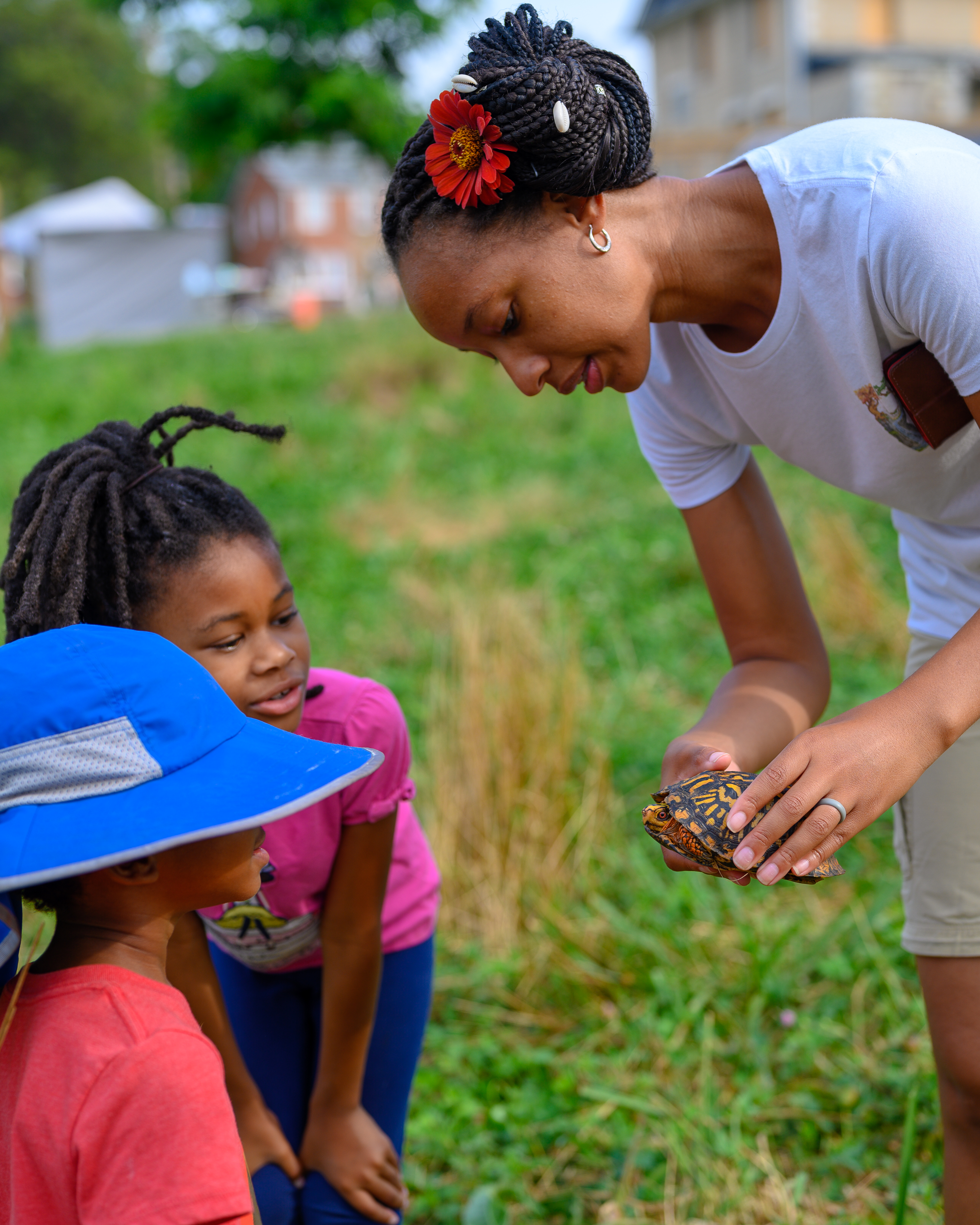
As a pediatric nurse, Atiya Wells became aware of the detrimental effects that an unhealthy lifestyle could have on her patients. Many were suffering from diet-related illnesses that could have been avoided through better nutrition and more physical activity. This sparked an interest in Wells to learn how to help educate her patients about making healthier choices and introducing more fruit and vegetables into their diet.
At the same time, Wells was developing her own connection to the outdoors and nature. She began organizing meet ups at local parks in her Baltimore neighborhood for her young family to connect with other preschool-aged kids and their families. “People started asking me questions about the plants and trees, so I figured if I’m going to be leading them, I probably should know the answers,” said Wells.
Thus began Wells’ deep exploration into the natural world. “I took every environmental and nature-related class that I had time and could afford to attend. And I read a lot of books—I wanted to learn everything,” said Wells. With passionate determination, Wells quickly evolved into a budding naturalist.
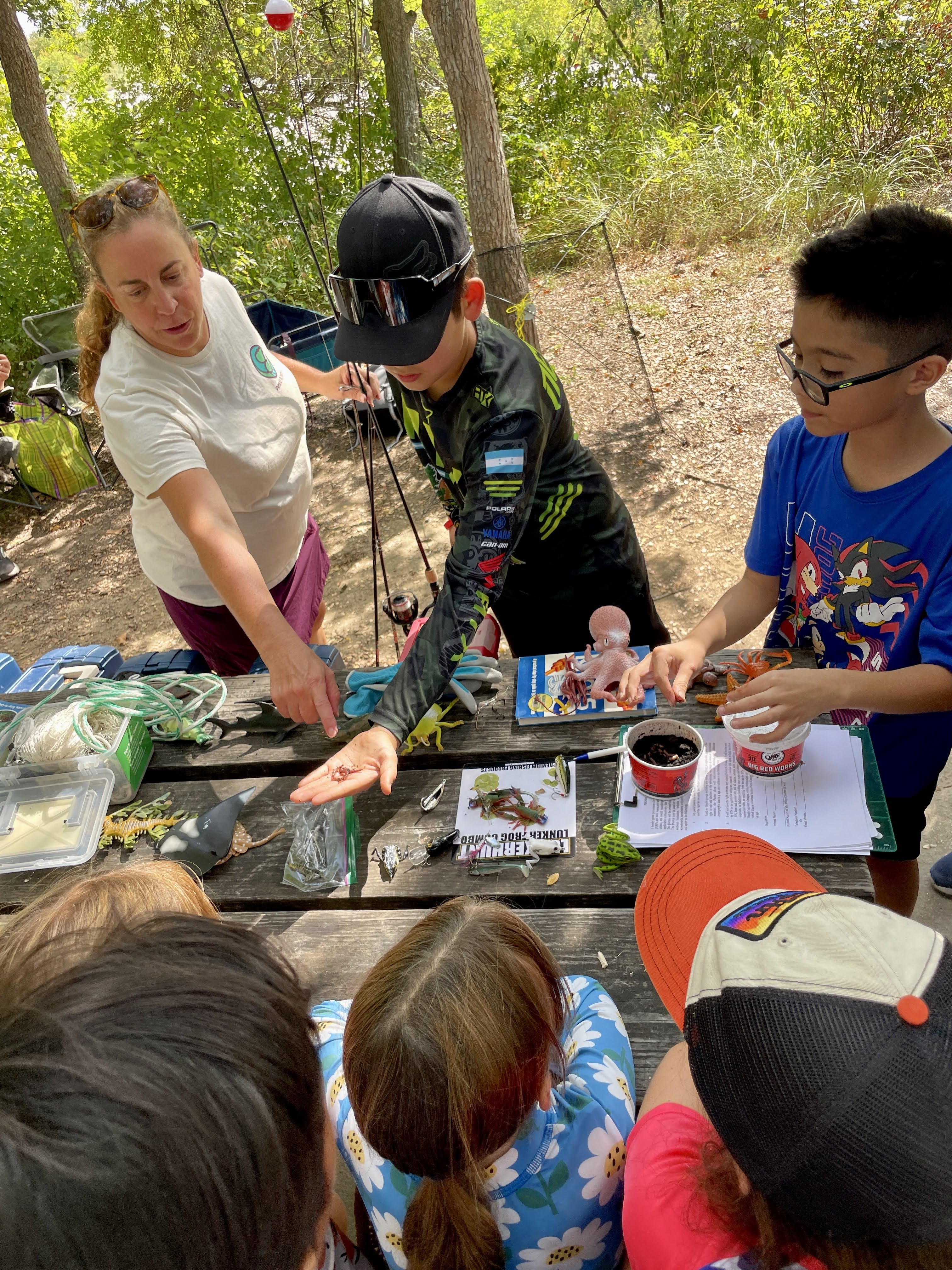
When Heather Kuhlken moved into a new house in Austin, Texas, with her young family in 2008, a neighbor came over and asked, “I heard you used to teach science outside. Can you take our family and friends camping and teach us some science?” Kuhlken pointed to her three- and six-year-old children and responded, “I don't think so, that sounds too hard to do with two little kids.” As she reflected on the conversation, her love for teaching natural sciences to young people and her passion for spending time outdoors tugged at her heart. Within a few hours, Kuhlken changed her mind.
“I went inside and thought about how I would do it. I knew that I wanted to take all ages outside together. I wanted siblings and families to have shared memories in the outdoors,” said Kuhlken. “And, I wanted to teach natural sciences, but in a way that people wouldn’t realize they were learning. Basically, I planned three years of outings and then went back outside and said yes.” Families in Nature (FIN) was born.

Tyrhee Moore
Tyrhee Moore’s outdoor journey began at age 12 when he was introduced to outdoor adventure through a City Kids Wilderness Project summer camp held near Jackson Hole, Wyoming. Stepping off the plane into the Bridger-Teton National Forest, Moore was able to leave the perils of his Washington, D.C. neighborhood behind. “I immediately realized that there was more out there for me and my world became so much bigger,” said Moore.
In the Grand Tetons, Moore experienced deep immersion in our public lands and wilderness. Learning how to kayak, canoe, backpack, and rock climb on that first trip ignited a passion in him for the outdoors.
Moore returned to Wyoming summer after summer, and his love for the outdoors grew. He transitioned from a City Kids camper to volunteer. Then, after graduating from West Virginia University and becoming a wilderness instructor, he became a City Kids program coordinator and was able to provide the same types of life-changing opportunities to youth like him.
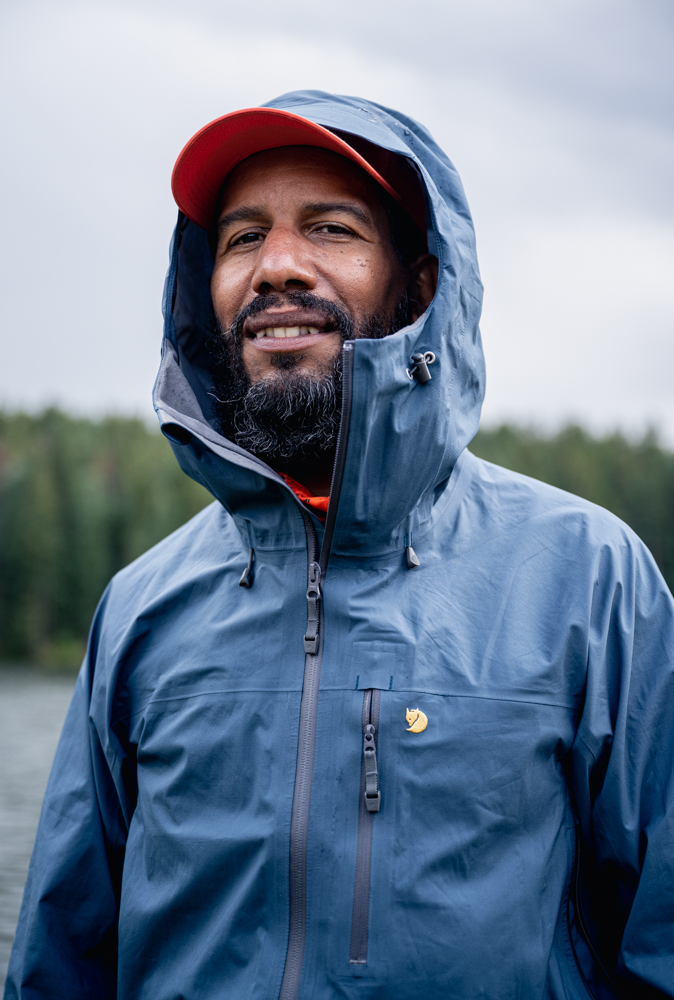
Nature is a way of life for Manny Almonte.
Growing up in the bustling city of Santo Domingo in the Dominican Republic, Almonte sought peace and freedom during weekend, holiday, and summer visits to his father’s home in Bonao, an inland town at the foothills of the Pico Duarte mountains. “I was able to experience nature beyond the beach. Usually you think of the Caribbean Sea and how beautiful the beaches are, but when you go into the land, you find beautiful mountains, streams, and wildlife—and that is something that I always looked forward to,” said Almonte. “I didn't experience nature intentionally; it was simply life.”
Today, Almonte shares that way of life with young Black and Brown men from New York City and Denver and uses it as a vehicle to help them create connections with nature, their passions, their inner selves and their communities through his non-profit organization Young Masterminds Initiative and its Camping to Connect outdoor mentorship program.
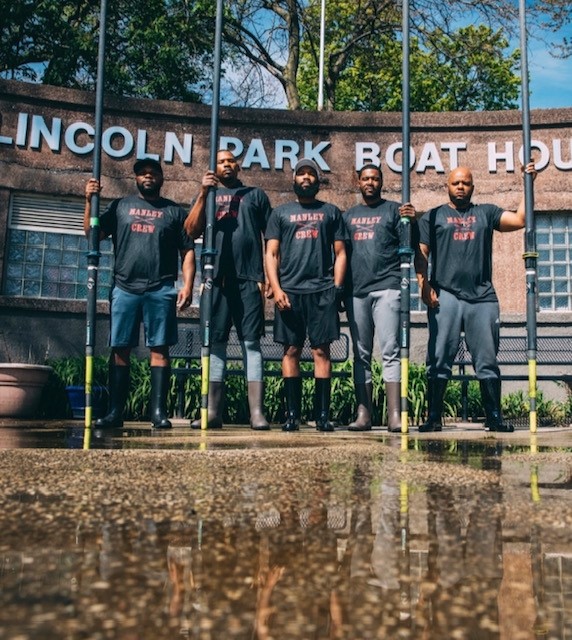
“The moment I wrapped my hands around those oars, my life changed. I went to college, I traveled the world, I started a foundation, I wrote a book. I was able to do all of these amazing things,” said Cooper. “It wasn’t, ‘am I smart enough?’ I was just looking for an opportunity. And that’s the story of so many young people out there. So, let’s give them an opportunity.”
As captain of the first all-Black high school rowing team, Cooper learned how to bridge differences, build a team, and heal from the trauma he experienced in his neighborhood. “There was something about the water that gave us a peace that we had never felt before. We needed that,” said Cooper. “I wasn’t just introduced to a sport; I was introduced to wellness.”
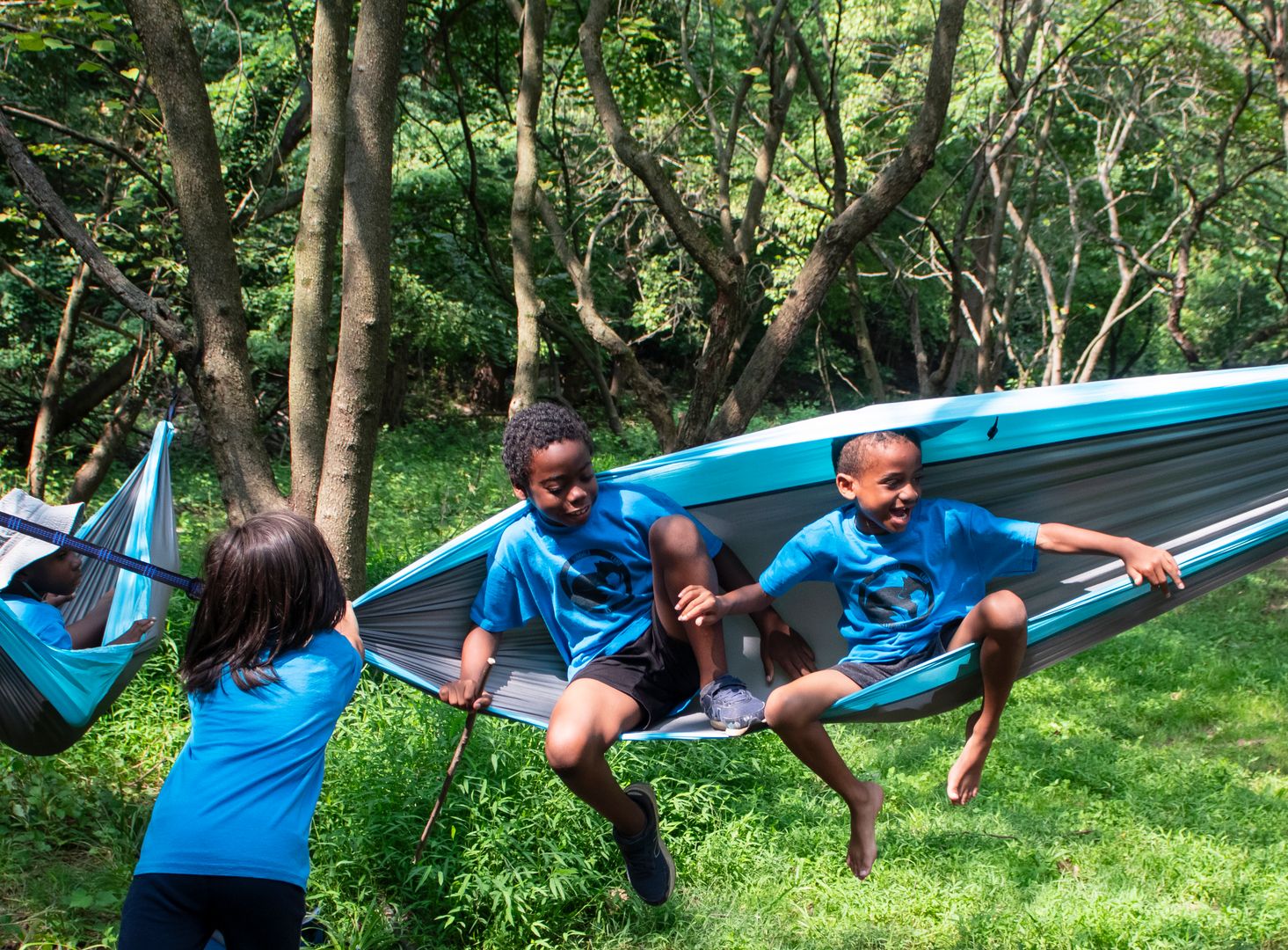
“When my daughter went to kindergarten, I developed a program to take her school’s kindergarten classes outside. We were doing lessons on plant identification and a little foraging, but it really was just about them being outside to play and learn while they were playing,” said Wells. This program was the early beginning of Backyard Basecamp, which Wells founded in 2019 to provide culturally relevant urban environmental education and to connect more families in northeast Baltimore, especially those of color, to local outdoor spaces.
“I was envisioning the life I wanted to live and how I wanted to engage with my neighbors and community. The name Backyard Basecamp came to me because I wanted people to reconnect to the land in their own backyards,” said Wells. For those who didn’t have a backyard, Google Maps helped Wells find one. Looking for a place to sit and observe nearby nature every day (per a naturalist program assignment), Wells pulled up Google Maps and noticed a green space a few blocks from her home.
There Wells found an unmarked and overgrown seven-acre city park and three-acre vacant lot that she turned into the community’s basecamp—BLISS Meadows. Today BLISS Meadows is a 10-acre land-reclamation project featuring two ponds; a newly renovated farm house; goats, chickens, and bees; a farm with produce and medicinal herb gardens; an orchard with fruit and nut trees; a pollinator meadow; and a forest full of nature trails, meditation spots and natural play spaces.
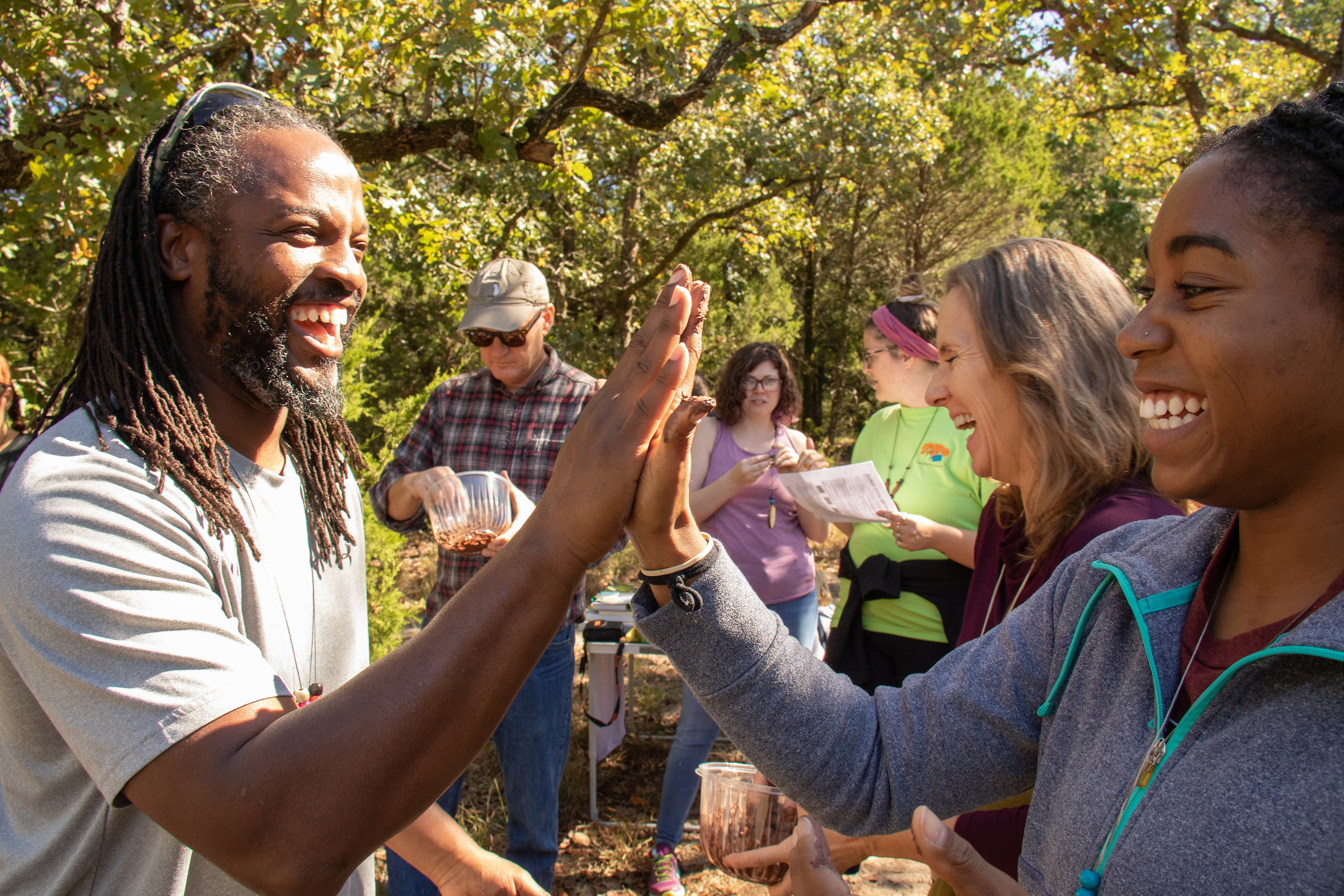
Eight families signed up within 24 hours. By the end of the year, their nature community was going outside together every other week with 35 families (about 120 people), and they had to start a waiting list.
“What's unique about our family-centric approach is that the kids are learning, the adults are learning, and they're teaching each other,” said Kuhlken. “We’re reinforcing that sense of community that's crucial to having positive, joyful, and transformative experiences in nature.”
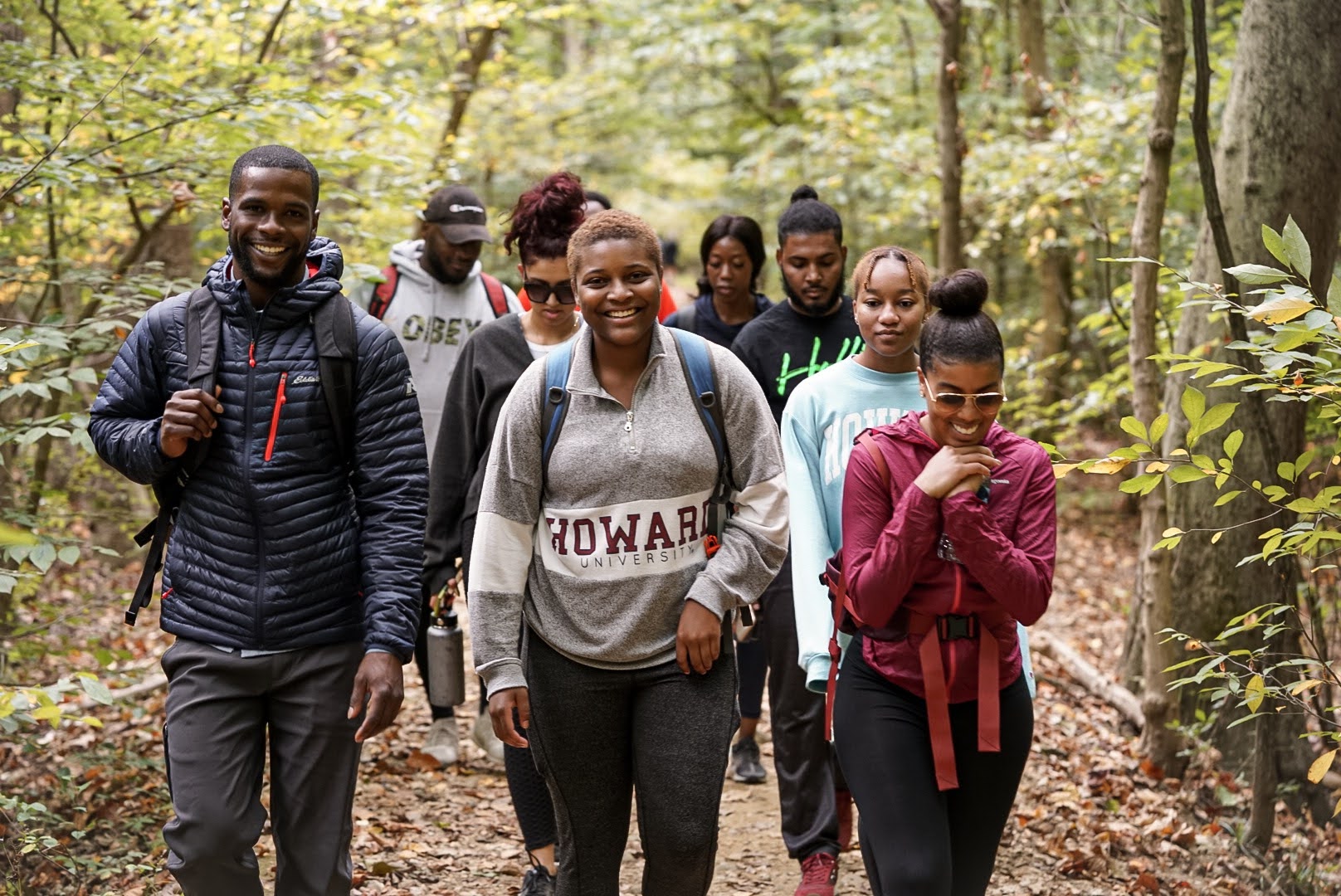
Moore knew that his outdoor experience as a child was not typical for youth and adults from marginalized communities and that people in his hometown were also missing out on the physical and mental health benefits of nature. So, at the age of 25, he founded Soul Trak Outdoors.
The nonprofit connects communities of color to local green spaces and public lands in the Washington, D.C. metro area. “I decided to start Soul Trak with the vision of touching everyone and creating a culture shift,” said Moore. By engaging people of color, Soul Trak is developing a representative community in the outdoors that more accurately reflects our nation’s population.
In addition to his leadership in equitable access to outdoor recreation, Moore is a trailblazer in the mountains. He was a member of the first all-Black team to attempt to summit Denali and has amassed an impressive list of climbs, including Mt. Denali, Mt. Kilimanjaro, Mt. Aconcagua, and the Rwenzoris in Uganda. These achievements demonstrate to youth of color that they too belong in the outdoors.
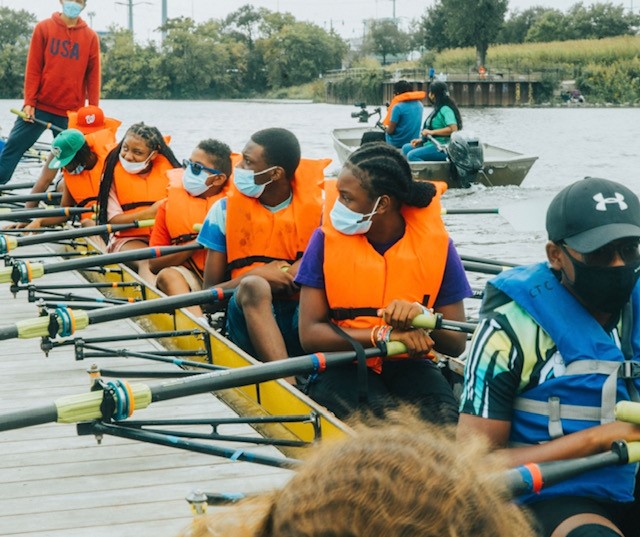
Today, the best-selling author, two-time Golden Oar recipient, and IBPA Benjamin Franklin Awardee travels across the United States working through his non nonprofit organization, A Most Beautiful Thing Inclusion Fund, (AMBTIF), to break barriers within the sport of rowing by increasing sustainability, access to rowing, and diversity in youth rowing programs. “The idea is to make sure that every boathouse in our country reflects the diversity of its city, at every level of competition, from recreational rowing to the Olympics,” said Cooper.
“Every year we go into five different cities and start a rowing program. We go into communities that are neglected, public schools that don’t have resources, and we introduce young kids to swimming, rowing, college and beyond. It's been powerful.” In 2022 alone, AMBTIF introduced 2,000 kids of color to the sport of rowing. And this is just the beginning.
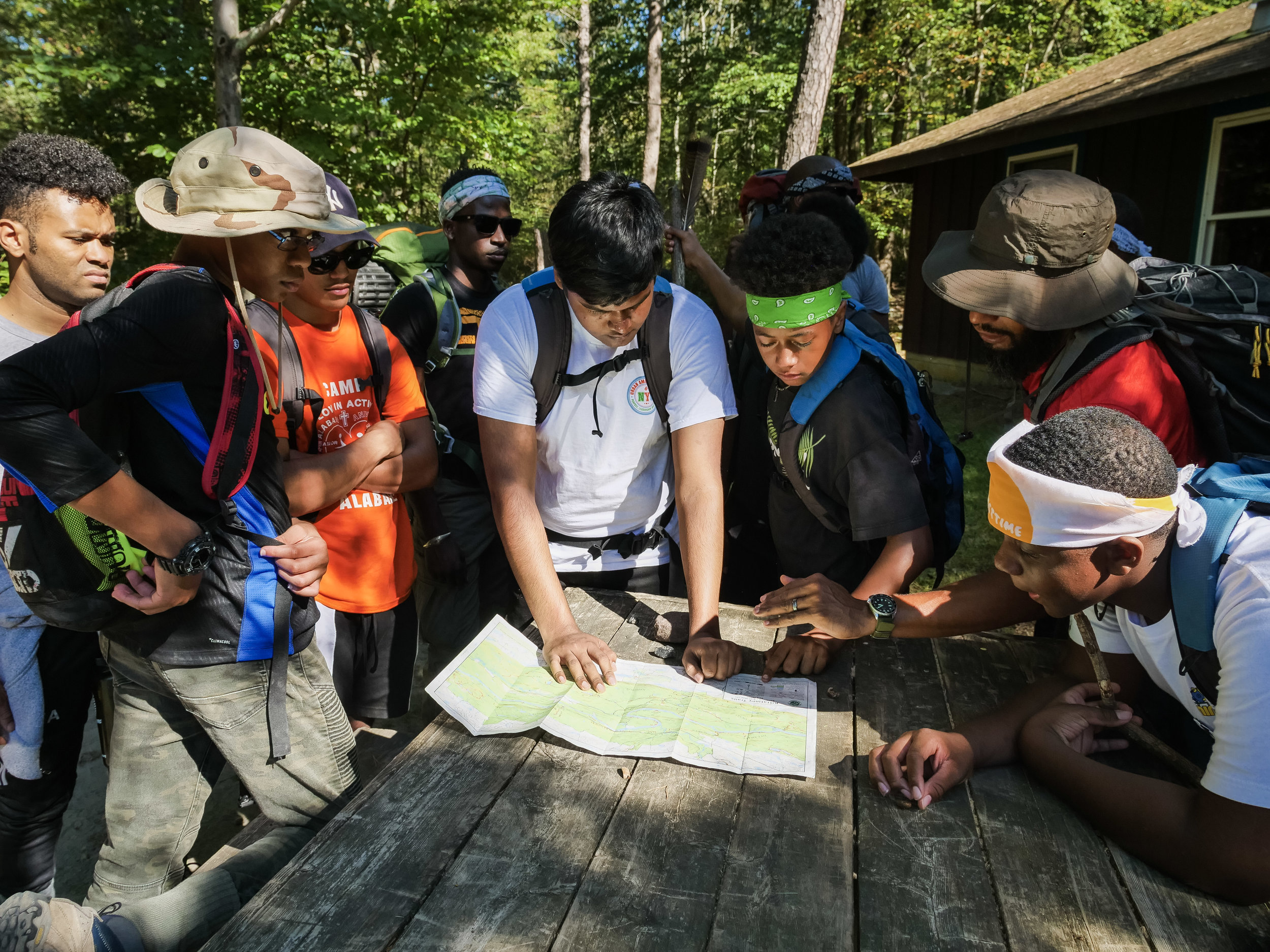
Camping to Connect uses outdoor recreation to instill self-reliance, healthy lifestyle choices, leadership, introspection, and brotherhood.
“In the quiet of the forest, we hold conversations on topics like race, masculinity, and mental health that tackle the meaningful issues these youth face in America’s cities,” said Almonte. “These trips also show our young participants and their families that America’s outdoor spaces are safe and theirs to benefit from, too.”
Camping to Connect’s volunteer mentors are from Mastermind Connect, a nationwide collective (also founded by Almonte) of progressive men of color who support one another to become the best versions of themselves.
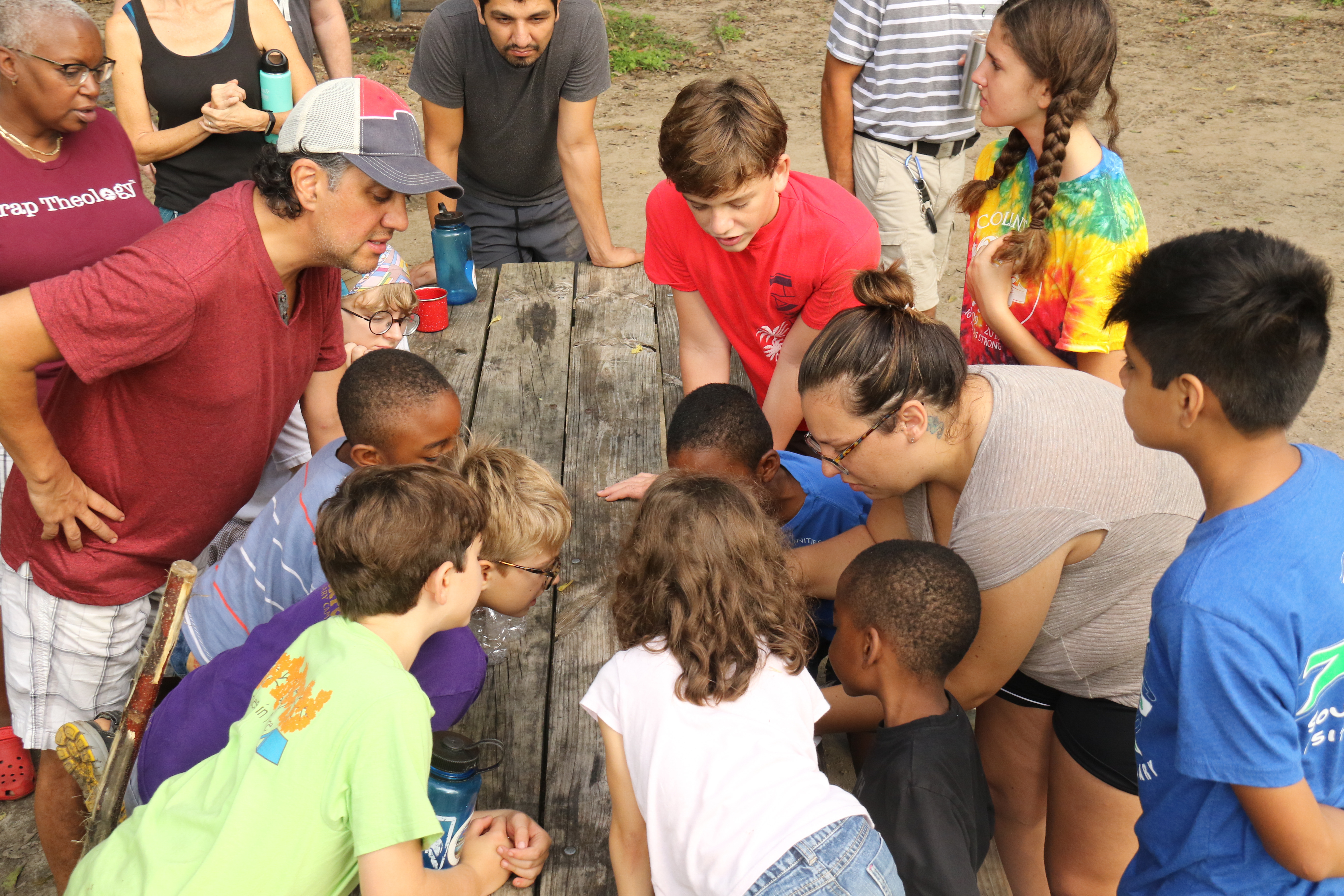
FIN’s mission is to connect children and their families to nature, and to each other, through outdoor learning, playing, and volunteering. The learning comes in the form of “sneaky science,” as dubbed by Kuhlken. “Sneaky science is my phrase for what happens when you take people outside and their curiosity drives them to look deeper into nature. Then, a mentor adds a sentence or two of scientific knowledge that enhances the activity and drives their curiosity even further.”
Kuhlken's nocturnal creatures lesson is a good example. She distributes headlamps to kids during a nighttime adventure. When they shine the light onto a field, it looks like it’s sparkling with glitter. Kuhlken provides some “sneaky science” when she explains that those sparkles are actually reflections from spider eyes. This two-minute science lesson teaches how nocturnal creatures, such as spiders, have a membrane in the back of their eyes that reflects light and allows them to gather twice as much light while seeing in the dark. “Then the kids excitedly run around looking for spiders and connecting with nature for the next hour,” says Kuhlken.
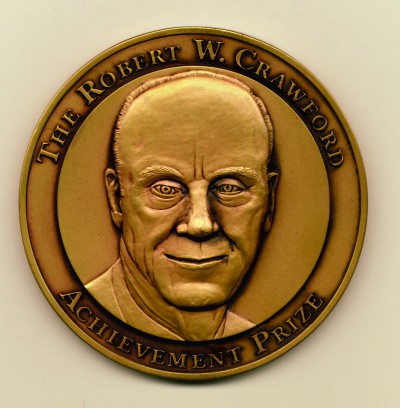
The Crawford Prize
Presented annually since 2002, the purpose of the prize is to recognize a living person who has dedicated him or herself to enhancing recreation opportunities for youth, making it possible for more young Americans to live healthy, participatory lives, thus reinforcing the work of the Foundation. Each year, the prize is awarded to that person, whether professional or volunteer, who has made an extraordinary contribution in advancing recreation programs for youth from disadvantaged circumstances.
The prize consists of a $50,000 cash award which the prize winner may direct to an organization providing programming aligned with the Foundation's mission. The individual members of the Foundation's Board of Trustees may make nominations. The award is presented at the Annual Meeting of the Board of Trustees.
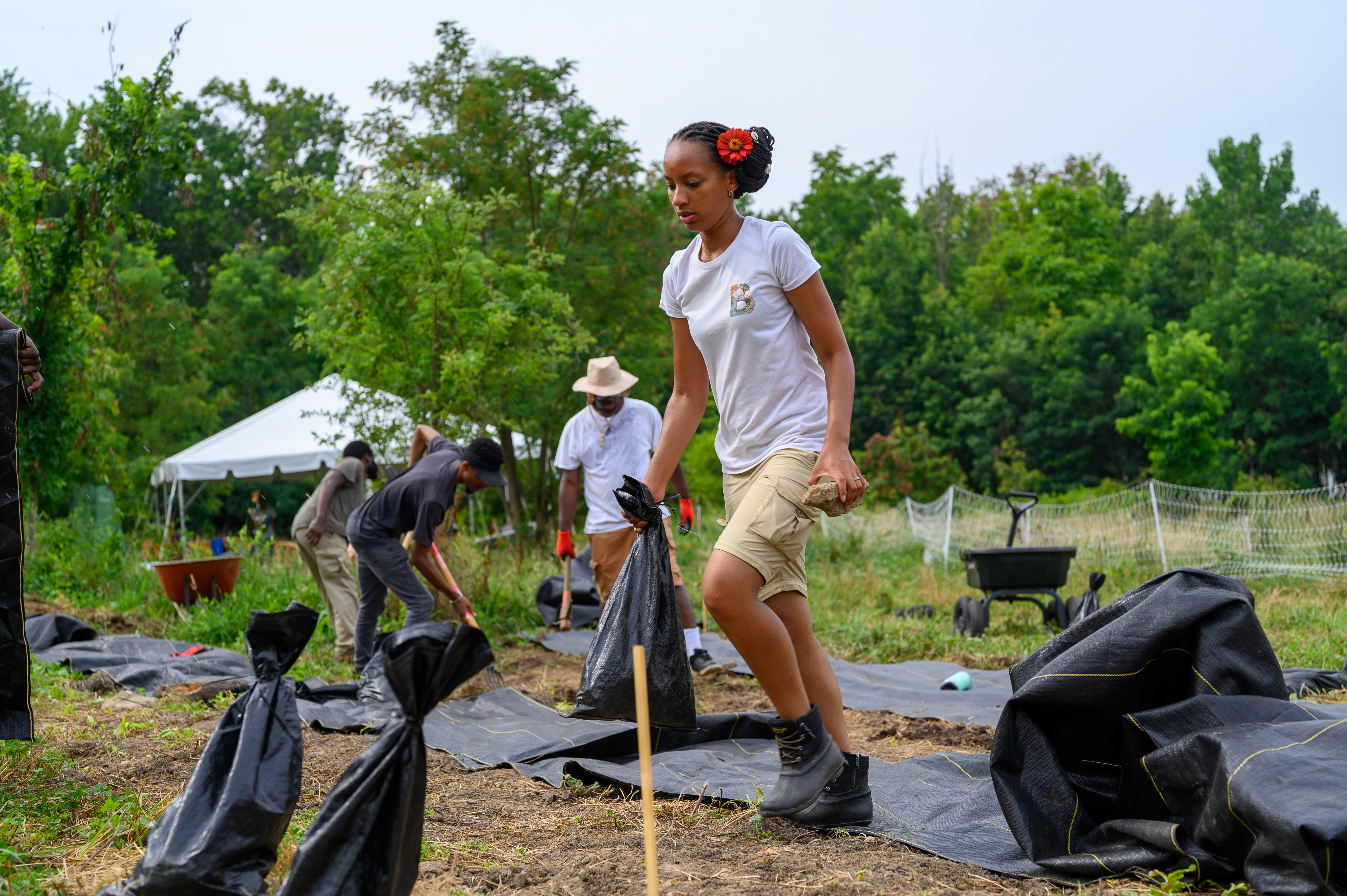
The work that Wells and Backyard Basecamp does at BLISS Meadows is at the intersection of environmental and food justice. It’s especially needed, in food deserts like Wells’ neighborhood, where grocery options are limited. Backyard Basecamp creates over 20,000 pounds of produce annually that is distributed to the community. “I remember one of the first things that I learned in my classes was that all parts of the dandelion are edible,” said Wells. “There are so many edible and medicinal plants in nature—nobody should be hungry, and nobody should be sick.”
BLISS Meadows provides a space for people of color to feel safe in nature and learn about the outdoors and the environment. While attending classes and workshops, Wells often noticed that she was the only person of color in the room. She researched the relationship of people of color to the outdoors and learned that ancestral wounding and historical trauma contribute to the lack of diversity in nature-based activities. “I wanted to create a safe space for Black and brown people to reconnect to the land so that when they go into predominantly white spaces in the outdoors, they already have a sense of knowing that they too belong outside,” said Wells.
One way Backyard Basecamp accomplishes this is through intergenerational programming that provides opportunities for whole families to participate in outside activities together. “Initially we were focused on getting kids outside, but then we wanted to create programs where families could be together and share in those activities and more deeply engage in nature together,” said Wells. Backyard Basecamp’s urban farming, nature walks, and health and wellness programs are offered to all ages. Backyard Basecamp’s suite of environmental education programs includes a six-week nature-based summer camp for children, ages 3-13, and an environmental workforce development program that introduces youth of color, ages 16-24, to green careers.
.jpg)
Moore is often recognized for his profound impact on making the outdoors a more welcoming place. In 2014, he was named a Backpacker Magazine Hero of the Year and received the Outdoor Industry Inspiration Award. More recently, Outside Magazine recognized Moore as an Outdoor All-Star.
Moore’s path provides him a platform to speak, advocate and heighten awareness of the adventure gap and the need to increase the representation of youth and leaders of color in outdoor spaces.
“Representation matters, one hundred percent. We need to see more Black and Brown people in those spaces. We have to see more women in those spaces,” said Moore. “The best way to do that is to get them there.”
Images courtesy of Soul Trak Outdoors.
In recognition of his steadfast commitment to creating a fairer world and for his extraordinary efforts to break down barriers for youth of color in the sport of rowing, Arshay Cooper was awarded the 2022 Robert W. Crawford Achievement Prize. “I’m grateful for this recognition. Right away I thought about the new boats, the extra tours, the college trips that the kids will receive because of this Prize. I’m so excited to give this award to our young people to provide access and opportunity through the life-changing sport of rowing.”
Images courtesy of Arshay Cooper.
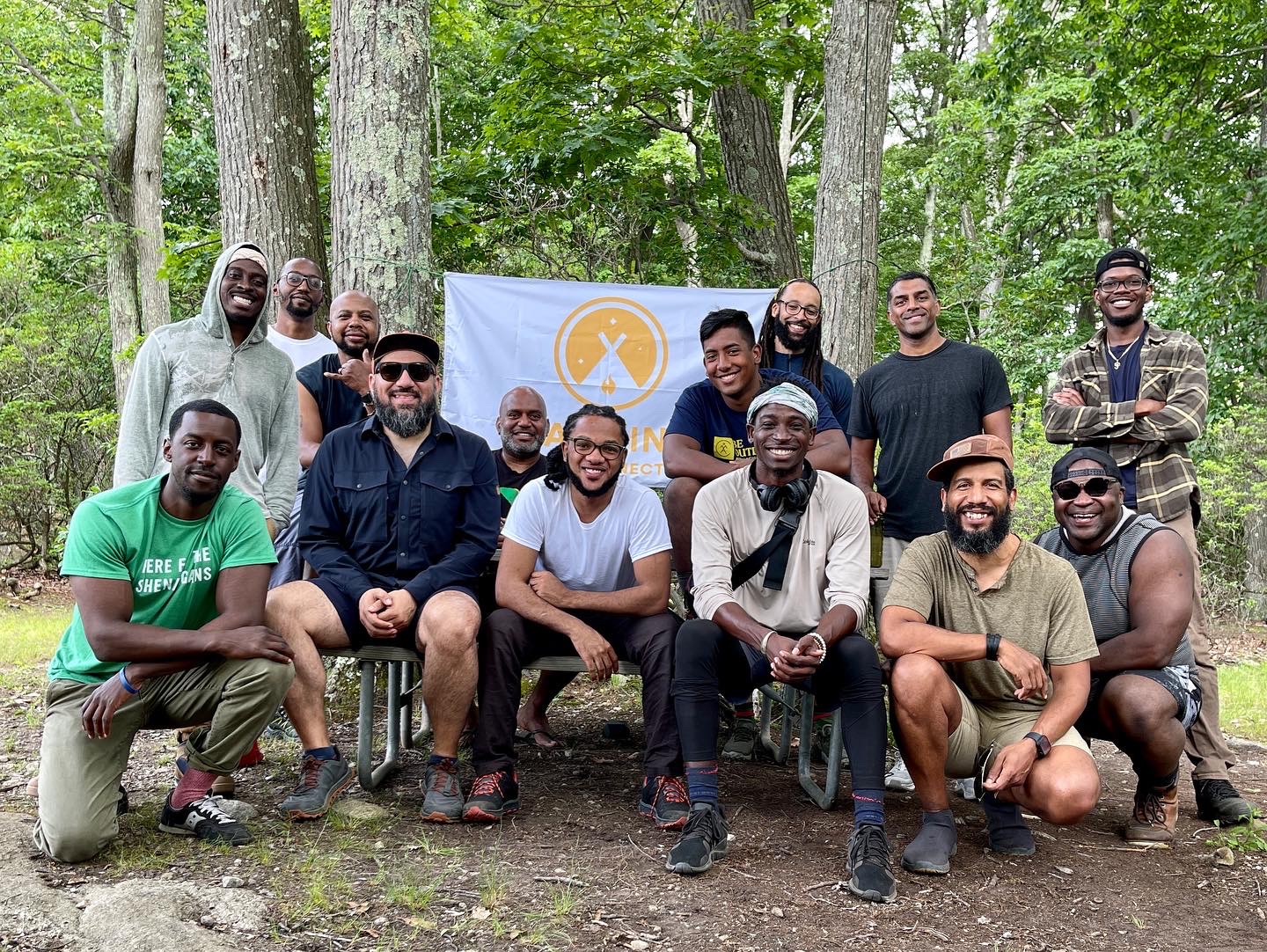
“Mentoring these young men is our way to give back and work with younger versions of ourselves. There was so much we needed to learn, relearn, unlearn [like generational trauma and boundaries we had set for ourselves based on fear] and overcome. This is the catalyst for our work with the young men,” said Almonte. “We understand that someone has to share these experiences with them—to go out into nature with them and help them see and feel the healing power of nature, to connect with nature and to connect with each other and, more importantly, to connect with themselves.”
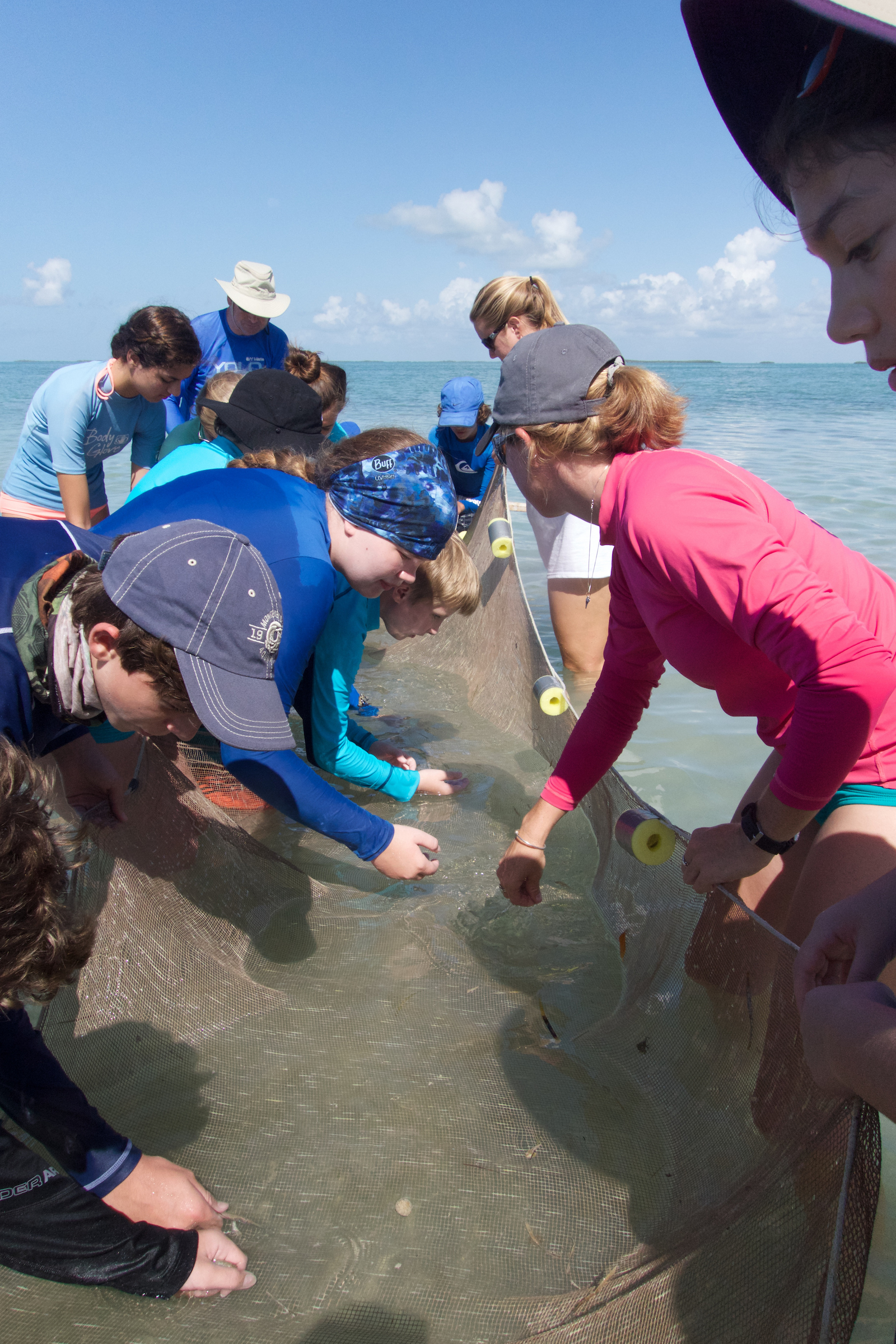
Since its backyard beginnings, FIN has grown into an international environmental education and conservation organization that has served more than 32,000 people, delivered 370,000+ hours of outdoor programming, and certified more than 250 nature guides. Its scalable model pairs hands-on, place-based learning with inclusive, nature-based leadership practices, helping young people translate curiosity into knowledge, and understanding into stewardship. Its Ecologist School curriculum, Nature Guide training, Junior Ecologist Certifications, Gear Library, and school and community partnerships deliver equitable, research-informed outdoor learning that builds scientific literacy, leadership, a deep love for nature, and a lifelong commitment to conservation.
In addition to leading and growing FIN, Kuhlken has presented on environmental education, equitable access, community resilience, and youth leadership at local, national, and international convenings, including most recently at the International Union for the Conservation of Nature World Conservation Congress. Kuhlken also authored a soon-to-be released book, Adventures in Ecology: A Guidebook to Inspire Environmental Literacy, Outdoor Exploration, and Nature Connection for All (Texas A&M University Press, 2026), that shares more than 1,100 hands-on science-based lessons for all ages that can be done anywhere with minimal materials.
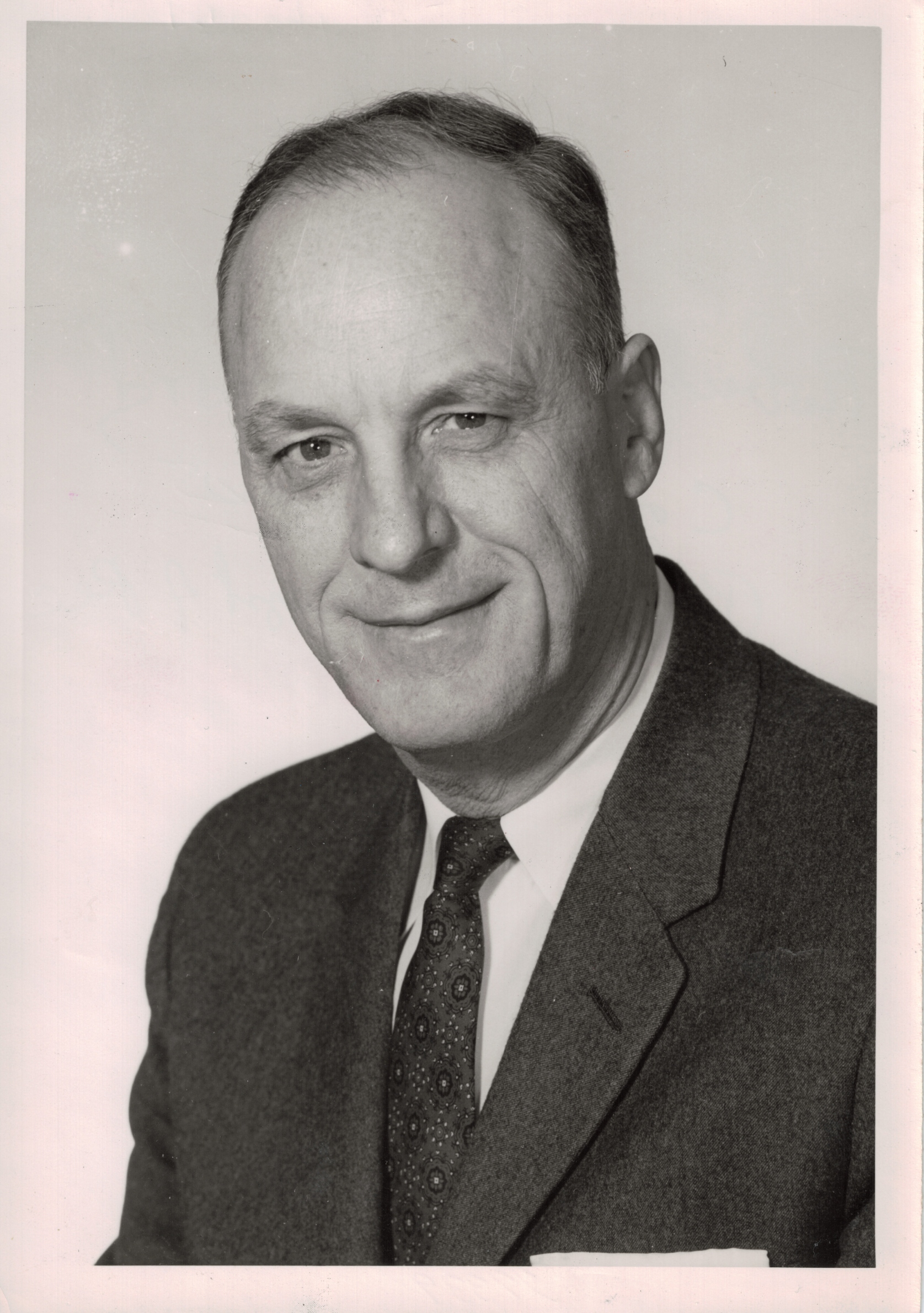
Robert W. Crawford
For 60 years, Robert W. Crawford served others through his role as Commissioner of Recreation in Philadelphia and as Executive Director of the National Recreation Foundation. As the Commissioner of Recreation, Mr. Crawford established a national model for local government's provision of recreational services for all citizens. His creativity and innovative ideas won him international recognition. He also played an important role in the development and growth of the National Recreation Foundation during his time as its Executive Director. Mr. Crawford personified those qualities of leadership and commitment that the Foundation seeks to foster, which is why this Achievement Prize was named in his honor.
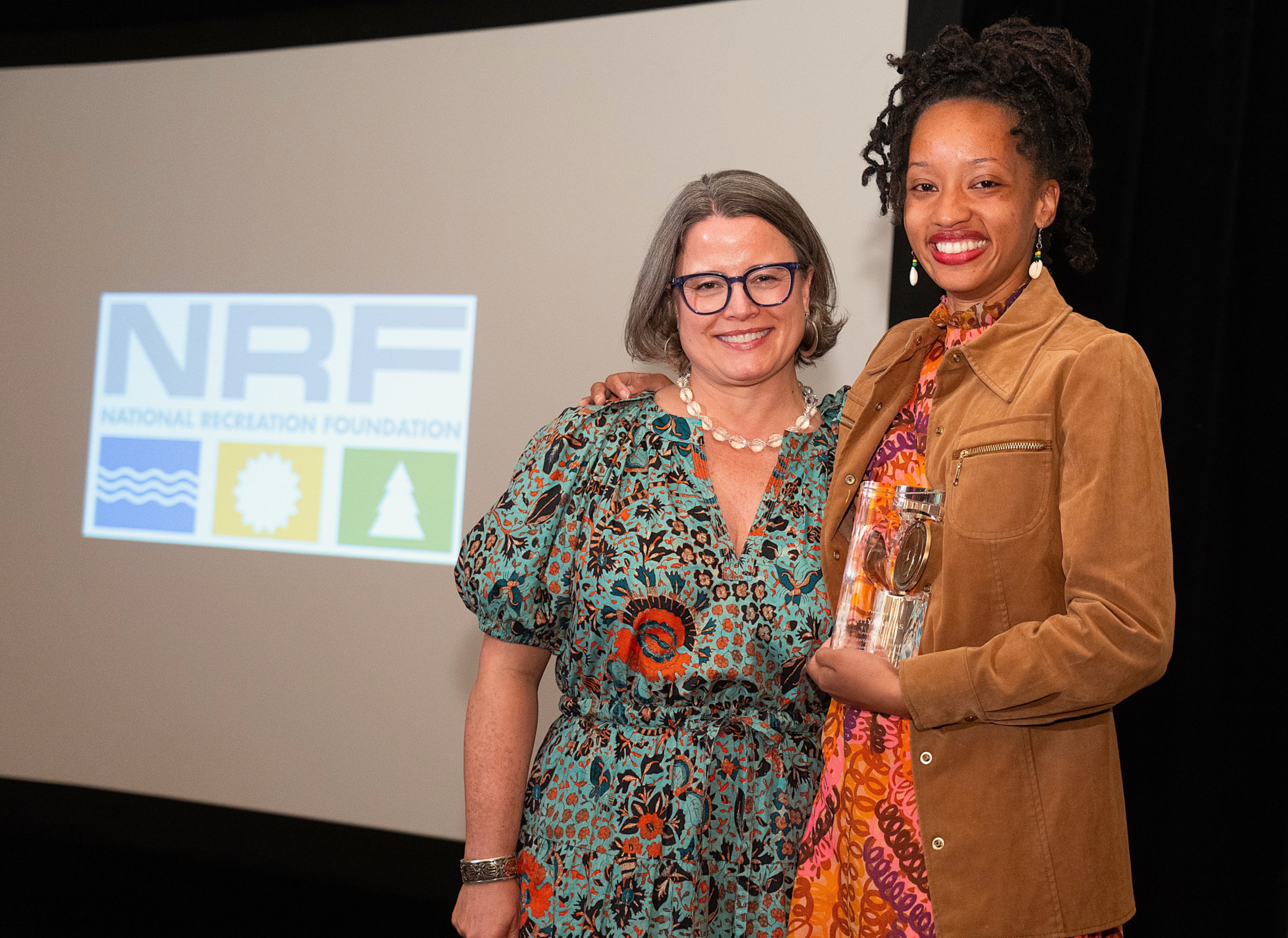
Wells is a true force of nature herself—unstoppable and deeply rooted in the belief that everyone deserves the chance to thrive outside. She has turned her vision into reality, creating initiatives that center nature in her neighborhood fostering a deeper connection to the environment for children and their families, and helping to build healthier, more resilient communities. In recognition of her leadership and the lasting changes she is making in her Baltimore community, the National Recreation Foundation awarded Atiya Wells the 2024 Robert W. Crawford Achievement Prize.
“When I found out that I won the Crawford Prize, I was surprised. It’s heartwarming to know that the impact that we have on our local community is being seen and heard across the country,” said Wells. “We just turned five. But we really hit the ground running and have been charging forward to keep this important work at the forefront—ensuring that everyone in our community has access to nature and to food.”
To learn more about Backyard Basecamp, visit backyardbasecamp.org.
Images courtesy of Backyard Basecamp.
.jpg)
The Crawford Prize
Presented annually since 2002, the purpose of the prize is to recognize a living person who has dedicated him or herself to enhancing recreation opportunities for youth, making it possible for more young Americans to live healthy, participatory lives, thus reinforcing the work of the Foundation. Each year, the prize is awarded to that person, whether professional or volunteer, who has made an extraordinary contribution in advancing recreation programs for youth from disadvantaged circumstances.
The prize consists of a $50,000 cash award which the prize winner may direct to an organization providing programming aligned with the Foundation's mission. The individual members of the Foundation's Board of Trustees may make nominations. The award is presented at the Annual Meeting of the Board of Trustees.
(1).jpg)
The Crawford Prize
Presented annually since 2002, the purpose of the prize is to recognize a living person who has dedicated him or herself to enhancing recreation opportunities for youth, making it possible for more young Americans to live healthy, participatory lives, thus reinforcing the work of the Foundation. Each year, the prize is awarded to that person, whether professional or volunteer, who has made an extraordinary contribution in advancing recreation programs for youth from disadvantaged circumstances.
The prize consists of a $50,000 cash award which the prize winner may direct to an organization providing programming aligned with the Foundation's mission. The individual members of the Foundation's Board of Trustees may make nominations. The award is presented at the Annual Meeting of the Board of Trustees.

The power of connection to nature is highlighted in the award-winning short film, Wood Hood, which follows a group of young men on a wilderness journey with Camping to Connect. Produced by Almonte and Young Masterminds Initiative co-founder, Andy Isaacson, Wood Hood champions justice, equity, diversity, and inclusion in the outdoors and urges viewers to recognize the power and potential of a world where nature is accessible and inclusive for all.
In recognition of his creativity, dedication, and steadfast commitment to changing the lives of young Black and Brown men and for his powerful work to increase access and inclusion for BIPOC youth in the outdoors, the National Recreation Foundation awarded Manny Almonte the 2023 Robert W. Crawford Achievement Prize.
“It is an honor to receive this award and to be respected by those who understand the value of investing in a community beyond its immediate neighbors,” said Almonte. “Young Masterminds Initiative has been asked to collaborate and expand our Camping to Connect program all over the country, from the Bay Area to Portland, Chicago, Detroit, Atlanta, and Texas. The prize money is going to allow us to build capacity, hire staff, and expand so we can do more of this good work.”
To learn more about Camping to Connect, visit campingtoconnect.com.
Images courtesy of Manny Almonte.
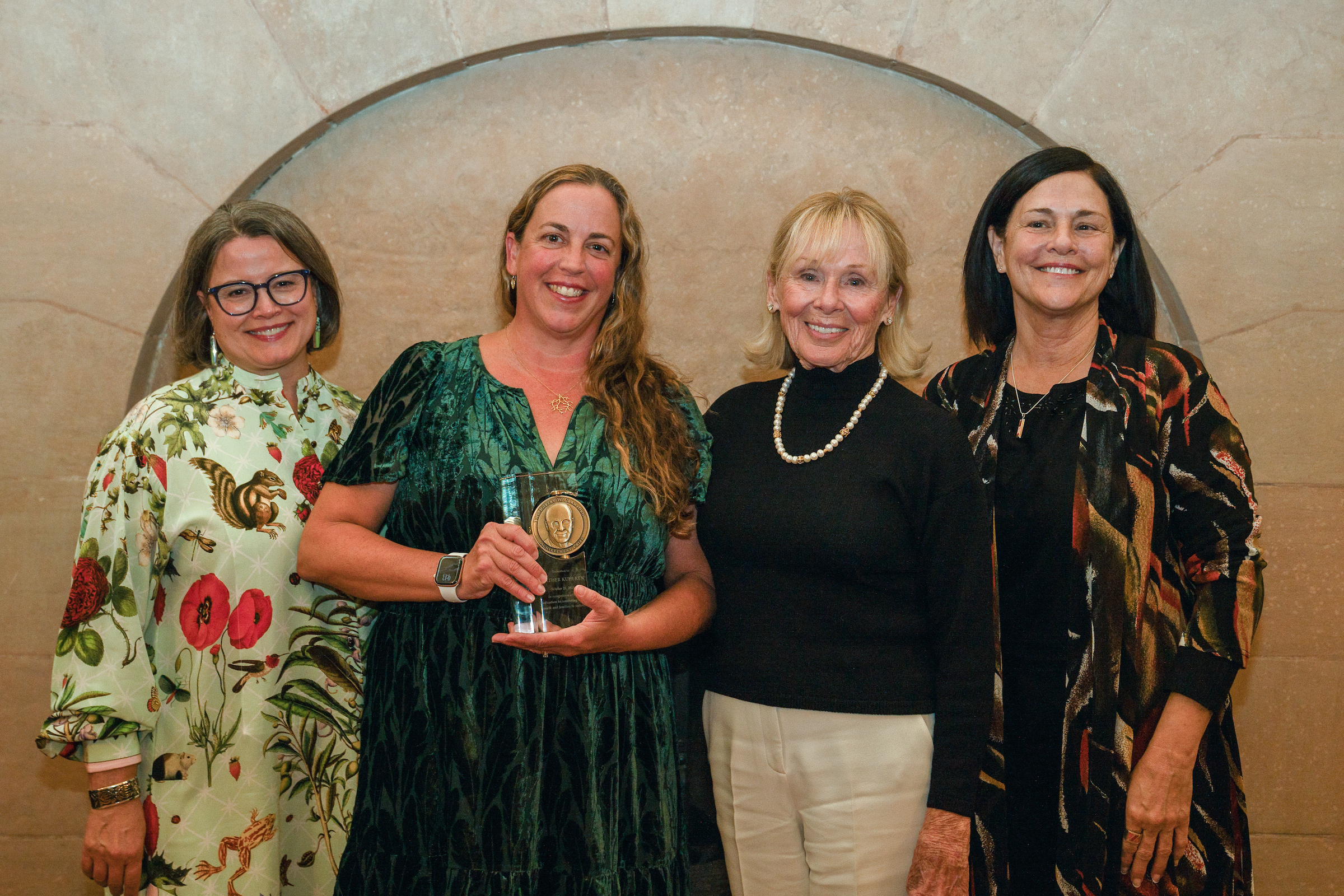
NRF specifically recognized Kuhlken for incorporating and celebrating families in her community-rooted programs that transform young people’s relationship with nature. “When we first learned about Heather's work with Families in Nature, we were so impressed by her creativity and focus on families,” said NRF President and CEO Sophie Twichell.
“It is an honor to receive the Crawford Prize and be recognized and supported by the National Recreation Foundation,” said Kuhlken. “Families in Nature has national and international partners, and the Crawford Prize will help us meaningfully activate those partnerships and launch nature communities in new locations throughout the United States and beyond.”
To learn more about Families in Nature, visit familiesinnature.org.
Images courtesy of Heather Kuhlken and Families in Nature.
Video
Watch this video to learn about the life and legacy of Robert W. Crawford.
.jpg)
The Crawford Prize
Presented annually since 2002, the purpose of the prize is to recognize a living person who has dedicated him or herself to enhancing recreation opportunities for youth, making it possible for more young Americans to live healthy, participatory lives, thus reinforcing the work of the Foundation. Each year, the prize is awarded to that person, whether professional or volunteer, who has made an extraordinary contribution in advancing recreation programs for youth from under-resourced communities.
The prize consists of a $50,000 cash award which the prize winner may direct to an organization providing programming aligned with the Foundation's mission. The individual members of the Foundation's Board of Trustees may make nominations. The award is presented at the Annual Meeting of the Board of Trustees.
.jpg)
Robert W. Crawford
For 60 years, Robert W. Crawford served others through his role as Commissioner of Recreation in Philadelphia and as Executive Director of the National Recreation Foundation. As the Commissioner of Recreation, Mr. Crawford established a national model for local government's provision of recreational services for all citizens. His creativity and innovative ideas won him international recognition. He also played an important role in the development and growth of the National Recreation Foundation during his time as its Executive Director. Mr. Crawford personified those qualities of leadership and commitment that the Foundation seeks to foster, which is why this Achievement Prize was named in his honor.
(1).jpg)
Robert W. Crawford
For 60 years, Robert W. Crawford served others through his role as Commissioner of Recreation in Philadelphia and as Executive Director of the National Recreation Foundation. As the Commissioner of Recreation, Mr. Crawford established a national model for local government's provision of recreational services for all citizens. His creativity and innovative ideas won him international recognition. He also played an important role in the development and growth of the National Recreation Foundation during his time as its Executive Director. Mr. Crawford personified those qualities of leadership and commitment that the Foundation seeks to foster, which is why this Achievement Prize was named in his honor.
.jpg)
The Crawford Prize
Presented annually since 2002, the purpose of the prize is to recognize a living person who has dedicated him or herself to enhancing recreation opportunities for youth, making it possible for more young Americans to live healthy, participatory lives, thus reinforcing the work of the Foundation. Each year, the prize is awarded to that person, whether professional or volunteer, who has made an extraordinary contribution in advancing recreation programs for youth from disadvantaged circumstances.
The prize consists of a $50,000 cash award which the prize winner may direct to an organization providing programming aligned with the Foundation's mission. The individual members of the Foundation's Board of Trustees may make nominations. The award is presented at the Annual Meeting of the Board of Trustees.
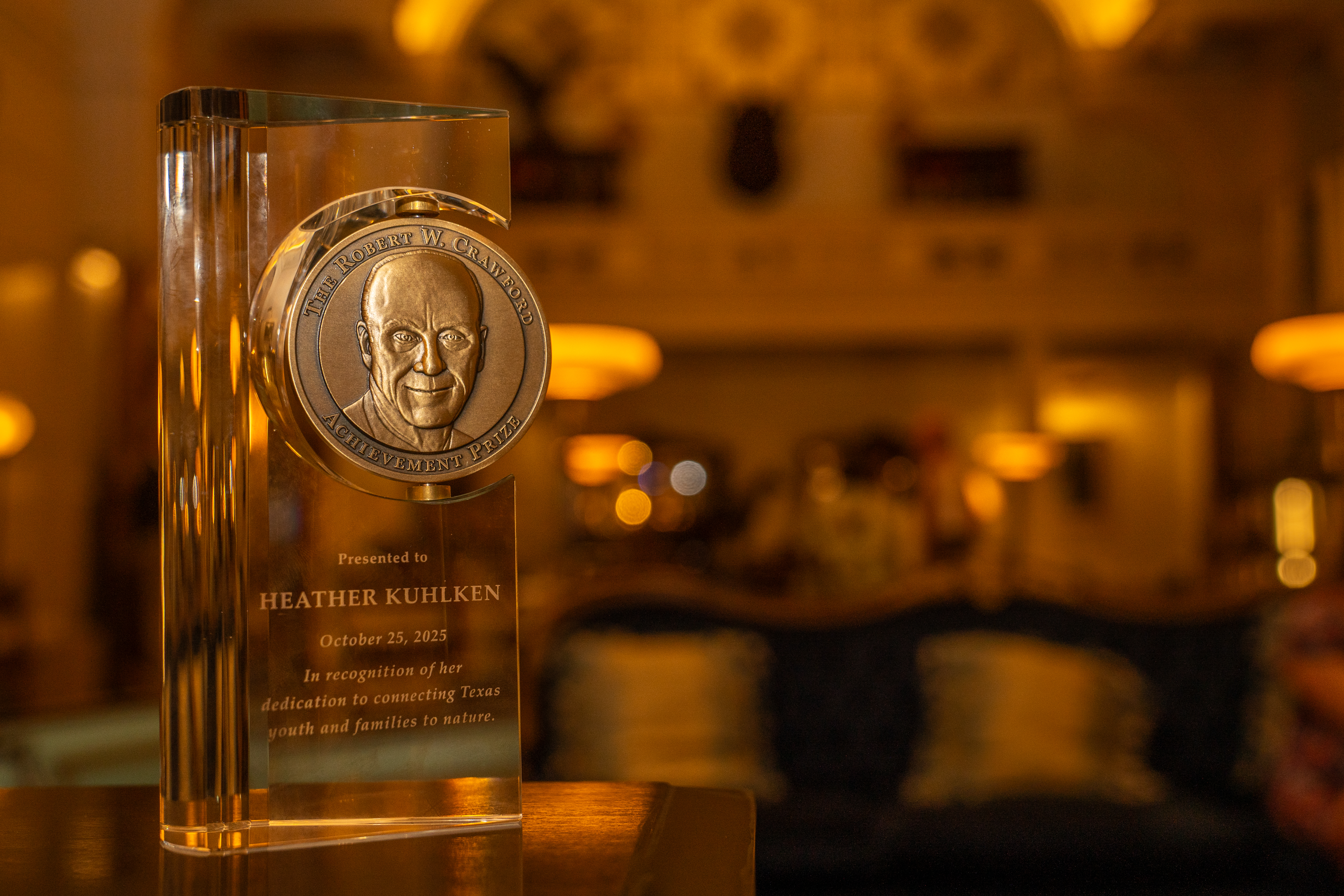
The Crawford Prize
Presented annually since 2002, the Robert W. Crawford Achievement Prize recognizes a person dedicated to enhancing recreation opportunities for youth, making it possible for more young people to live healthy, participatory lives, thus reinforcing the work of the Foundation. The Prize is awarded to a person, professional or volunteer, who has made an extraordinary contribution in advancing recreation programs for youth from disadvantaged circumstances. In addition to the recognition, the Prize consists of a $50,000 contribution supporting access to outdoor recreation.
Past Prize Winners
Peter A. Witt (2004)
College Station, TX
Jane G. Pepper (2003)
Philadelphia, PA
Dr. David McLone (2002)
Chicago, IL
.jpg)
Robert W. Crawford
For 60 years, Robert W. Crawford served others through his role as Commissioner of Recreation in Philadelphia and as Executive Director of the National Recreation Foundation. As the Commissioner of Recreation, Mr. Crawford established a national model for local government's provision of recreational services for all citizens. His creativity and innovative ideas won him international recognition. He also played an important role in the development and growth of the National Recreation Foundation during his time as its Executive Director. Mr. Crawford personified those qualities of leadership and commitment that the Foundation seeks to foster, which is why this Achievement Prize was named in his honor.
Video
Watch this video to learn about the life and legacy of Robert W. Crawford.
Video
Watch this video to learn about the life and legacy of Robert W. Crawford.
.jpg)
Robert W. Crawford
For 60 years, Robert W. Crawford served others through his role as Commissioner of Recreation in Philadelphia and as Executive Director of the National Recreation Foundation. As the Commissioner of Recreation, Mr. Crawford established a national model for local government's provision of recreational services for all citizens. His creativity and innovative ideas won him international recognition. He also played an important role in the development and growth of the National Recreation Foundation during his time as its Executive Director. Mr. Crawford personified those qualities of leadership and commitment that the Foundation seeks to foster, which is why this Achievement Prize was named in his honor.
.jpg)
Robert W. Crawford
For 60 years, Robert W. Crawford served others through his role as Commissioner of Recreation in Philadelphia and as Executive Director of the National Recreation Foundation. As the Commissioner of Recreation, Mr. Crawford established a national model for local government's provision of recreational services for all citizens. His creativity and innovative ideas won him international recognition. He also played an important role in the development and growth of the National Recreation Foundation during his time as its Executive Director. Mr. Crawford personified those qualities of leadership and commitment that the Foundation seeks to foster, which is why this Achievement Prize was named in his honor.
Video
Watch this video to learn about the life and legacy of Robert W. Crawford.
Past Prize Winners:
|
2020: Derwin Hannah, Baltimore, MD |
2010: Melissa T. Harper, Boston, MA |
|
2019: Richard Louv, Julian, CA |
2009: Robert J. Kohel, Westfield, WI |
|
2018: Peter Westbrook, New York, NY |
2008: Sidney Epstein, Chicago, IL |
|
2017: Susan Teegen, Philadelphia, PA |
2007: Kent Hutcheson, Denver, CO |
|
2016: Spike Lobdell, Stonington, CT |
2006: Margaret C. Daley, Chicago, IL |
|
2015: Khary Lazarre-White, New York, NY |
2005: Ronnie Lott, Redwood City, CA |
|
2014: Jackie Joyner-Kersee, East St. Louis, MO |
2004: Peter A. Witt, College Station, TX |
|
2013: Harrison Steans, Chicago, IL |
2003: Jane G. Pepper, Philadelphia, PA |
|
2012: John Conaway, Bethany Beach, DE |
2002: David McLone, Chicago, IL |
|
2011: Eleanor M. Josaitis, Detroit, MI |
Past Prize Winners:
|
2021: Tyrhee Moore, Washington, DC |
2011: Eleanor M. Josaitis, Detroit, MI |
|
2020: Derwin Hannah, Baltimore, MD |
2010: Melissa T. Harper, Boston, MA |
|
2019: Richard Louv, Julian, CA |
2009: Robert J. Kohel, Westfield, WI |
|
2018: Peter Westbrook, New York, NY |
2008: Sidney Epstein, Chicago, IL |
|
2017: Susan Teegen, Philadelphia, PA |
2007: Kent Hutcheson, Denver, CO |
|
2016: Spike Lobdell, Stonington, CT |
2006: Margaret C. Daley, Chicago, IL |
|
2015: Khary Lazarre-White, New York, NY |
2005: Ronnie Lott, Redwood City, CA |
|
2014: Jackie Joyner-Kersee, East St. Louis, MO |
2004: Peter A. Witt, College Station, TX |
|
2013: Harrison Steans, Chicago, IL |
2003: Jane G. Pepper, Philadelphia, PA |
|
2012: John Conaway, Bethany Beach, DE |
2002: David McLone, Chicago, IL |
Video
Watch this video to learn about the life and legacy of Robert W. Crawford.
Past Prize Winners
| 2023: Manny Almonte, Denver, CO | 2012: John Conaway, Bethany Beach, DE |
| 2022: Arshay Cooper, Fort Lee, NJ | 2011: Eleanor M. Josaitis, Detroit, MI |
| 2021: Tyrhee Moore, Washington, DC | 2010: Melissa T. Harper, Boston, MA |
| 2020: Derwin Hannah, Baltimore, MD | 2009: Robert J. Kohel, Westfield, WI |
| 2019: Richard Louv, Julian, CA | 2008: Sidney Epstein, Chicago, IL |
| 2018: Peter Westbrook, New York, NY | 2007: Kent Hutcheson, Denver, CO |
| 2017: Susan Teegen, Philadelphia, PA | 2006: Margaret C. Daley, Chicago, IL |
| 2016: Spike Lobdell, Stonington, CT | 2005: Ronnie Lott, Redwood City, CA |
| 2015: Khary Lazarre-White, New York, NY | 2004: Peter A. Witt, College Station, TX |
| 2014: Jackie Joyner-Kersee, East St. Louis, MO | 2003: Jane G. Pepper, Philadelphia, PA |
| 2013: Harrison Steans, Chicago, IL | 2002: David McLone, Chicago, IL |
Video
Watch this video to learn about the life and legacy of Robert W. Crawford.
Past Prize Winners:
| 2022: Arshay Cooper, Fort Lee, NJ | 2011: Eleanor M. Josaitis, Detroit, MI |
| 2021: Tyrhee Moore, Washington, DC | 2010: Melissa T. Harper, Boston, MA |
| 2020: Derwin Hannah, Baltimore, MD | 2009: Robert J. Kohel, Westfield, WI |
| 2019: Richard Louv, Julian, CA | 2008: Sidney Epstein, Chicago, IL |
| 2018: Peter Westbrook, New York, NY | 2007: Kent Hutcheson, Denver, CO |
| 2017: Susan Teegen, Philadelphia, PA | 2006: Margaret C. Daley, Chicago, IL |
| 2016: Spike Lobdell, Stonington, CT | 2005: Ronnie Lott, Redwood City, CA |
| 2015: Khary Lazarre-White, New York, NY | 2004: Peter A. Witt, College Station, TX |
| 2014: Jackie Joyner-Kersee, East St. Louis, MO | 2003: Jane G. Pepper, Philadelphia, PA |
| 2013: Harrison Steans, Chicago, IL | 2002: David McLone, Chicago, IL |
| 2012: John Conaway, Bethany Beach, DE |
Past Prize Winners
| 2024: Atiya Wells, Baltimore, MD | 2012: John Conaway, Bethany Beach, DE |
| 2023: Manny Almonte, Denver, CO | 2011: Eleanor M. Josaitis, Detroit, MI |
| 2022: Arshay Cooper, Fort Lee, NJ | 2010: Melissa T. Harper, Boston, MA |
| 2021: Tyrhee Moore, Washington, DC | 2009: Robert J. Kohel, Westfield, WI |
| 2020: Derwin Hannah, Baltimore, MD | 2008: Sidney Epstein, Chicago, IL |
| 2019: Richard Louv, Julian, CA | 2007: Kent Hutcheson, Denver, CO |
| 2018: Peter Westbrook, New York, NY | 2006: Margaret C. Daley, Chicago, IL |
| 2017: Susan Teegen, Philadelphia, PA | 2005: Ronnie Lott, Redwood City, CA |
| 2016: Spike Lobdell, Stonington, CT | 2004: Peter A. Witt, College Station, TX |
| 2015: Khary Lazarre-White, New York, NY | 2003: Jane G. Pepper, Philadelphia, PA |
| 2014: Jackie Joyner-Kersee, East St. Louis, MO | 2002: David McLone, Chicago, IL |
| 2013: Harrison Steans, Chicago, IL |